I know y’all are probably tired of hearing about my Christmas decorations, and, honestly, I don’t blame you. But, ‘tis the season! So, one more post about them, and then I promise I’ll be done.
I wrote a post back in January about my grandmother. She died at the beginning of the year, and I had a hard time processing it. (I had no idea how much harder the year would get.)
After the funeral and once everyone had some time to grieve, her children – my mother and aunts and uncles – set about going through her things, passing them down and making sure everyone got a memory or two. I didn’t ask for much. I’m an admitted packrat, and I catch myself all the time attaching sentimental value to things other people would probably consider clutter, but I felt like there was no one item that could really help me mourn her and remember her. So, I didn’t ask for…anything, actually, and until last week, didn’t get anything.
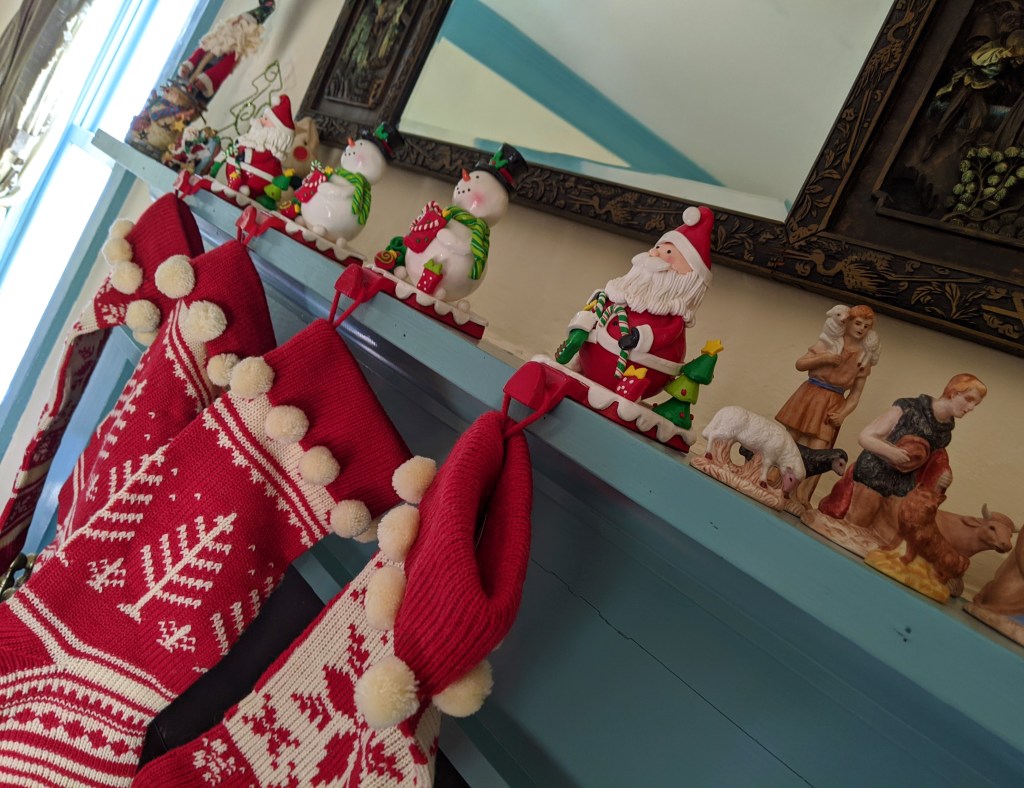
Boy, did that change. When my parents came to visit for Thanksgiving (after we’d taken some major precautions), my mom brought a packing tub full of dishware, a few very old baking dishes, and, in the kind of perfect timing only a super-mom can pull off, a large collection of Christmas decorations and ornaments.
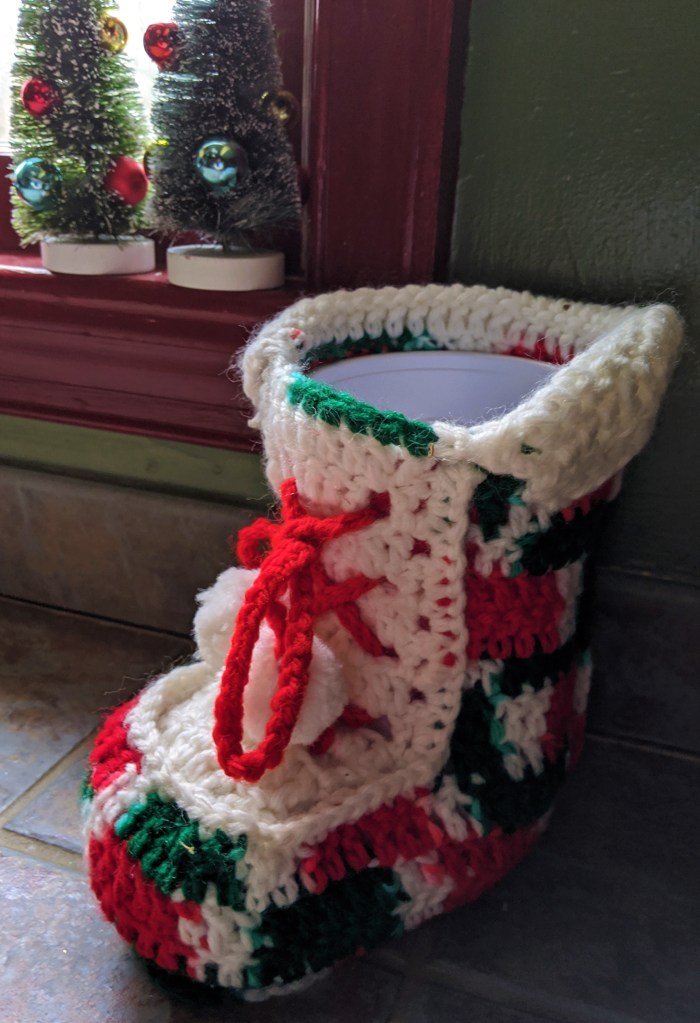
I quite like this little boot. You’re supposed to fill it with candy canes or other goodies, but there’s a pandemic, and I haven’t been to the store in…a while.
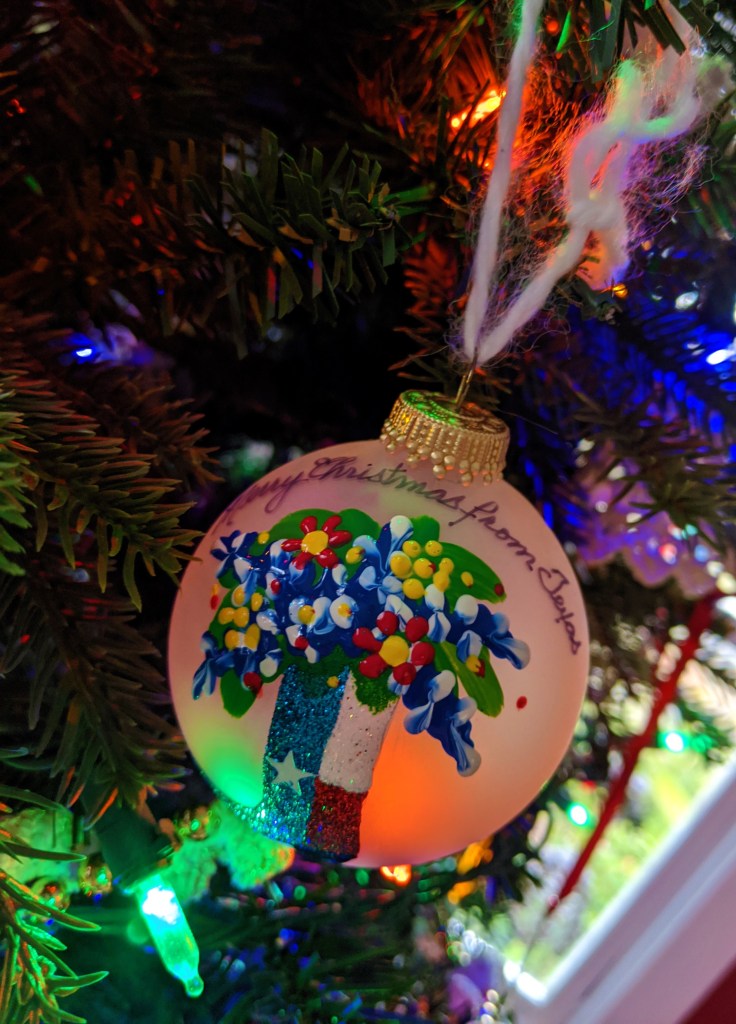
In 2002, I sang in a national choir in San Antonio. We bought my grandmother a little souvenir while we were there. My mom and I couldn’t tell if it had ever been taken out of its packaging, but now, it’s hanging on my tree.
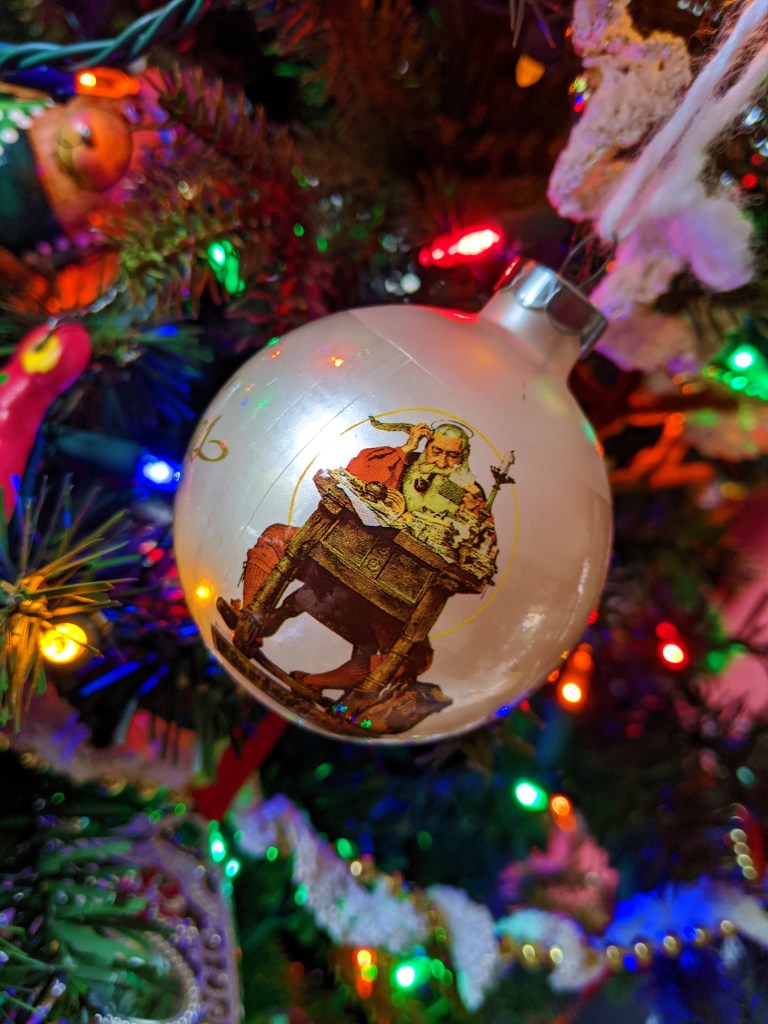
My grandmother also had quite a few Normal Rockwell-themed bobbles. I’m not sure how old they are, and like the Texas souvenir, I can’t tell that she ever even took them out of their boxes.
And, to go with my snowflakes, I now have some lovely, handmade, crocheted bells in both red and white. The red stands out so well against evergreen branches.
So, my tree has a few new pretty decorations, and I’ve got some physical reminders of my grandmother. I didn’t think I needed them, but I confess, I’m glad to have them. Grief’s a funny thing, isn’t it?
Her hands are slick and shiny, covered in butter, and flecked with dark bits of thyme and black pepper. In front of her, a large, raw turkey, slathered and herbed and stuffed, rests in an heirloom roasting pan on a bed of onions and celery.
“We’ll tell them after dinner.”
His hands are clean, but he picks at a bit of dry skin around the nail of his pointer finger.
“There’s no possible way they’ll know, right? No way they could have figured it out?”
“I don’t see how.”
She steps away from the counter and he moves forward, lifts the roasting pan and places the turkey in the oven. Already, it looks perfect. Picture perfect, just like a Norman Rockwell painting.
“I’m worried,” she says. “I just want everyone to enjoy dinner. I don’t want drama.”
Bright sunlight peeks in through a window above the sink. The tiny kitchen feels alive with fragrance and clutter and heat. The oven’s been on for hours.
“I know,” he answers. “It’ll be fine.”
She sets a timer.
“Someone will complain that it’s dry,” she says. “Or that it’s too salty. Or not salty enough.”
“Someone could have volunteered to cook.”
“I volunteered, though, so it’s my responsibility to make sure it’s good.”
“No, I didn’t. This felt like something I could do. I like to cook.”
“This isn’t cooking,” he argues. He gestures around the kitchen, to the towering collection of pots and pans stacked on the countertops, and then to the stack of dishes already soaking in the sink. “This is forced labor.”
She looks over to the timer. She sighs. “I don’t want to argue with you,” she says.
“Then let’s not.”
“Okay, let’s not.” She checks a list she’s hung on the fridge. She’s worried over it for days, adding and then crossing out items. “I need to make the sweet potatoes. We have marshmallows, right? You bought them?”
“I don’t like marshmallows,” he says. “Who decided to add marshmallows?”
“I have no idea,” she answers, and adds “but I’m certainly not a better cook than they were.”
“You’re a great cook,” he says.
She smiles. “And that’s why you love me.”
“One of many reasons,” he says. He walks over and pecks her on the lips. “What can I help with?”
Together, they chop and roast sweet potatoes, and glaze them with maple syrup and Bourbon. She makes a green bean casserole while he sets the table. She’s crafted a special centerpiece, full of little orange and yellow pumpkins, gold ribbons, and cinnamon sticks. He positions it just so, with little tea candles all around to catch the light.
She comes into the dining room carrying a tray of crystal wine glasses, a wedding gift they only use once a year. She places one down at each setting.
“Thank you for setting the table,” she tells him. “It looks great.”
“Thanks,” he says.
She doesn’t reply.
“You did a really good job on the centerpiece,” he adds.
“Are we doing the right thing?”
He can hear an edge in her voice, a raised pitch, a thinness.
“We’ve talked about it for months,” he says. “It’s an opportunity I’m probably not going to get again. And you’re excited, too, remember?”
“I am,” she answers. “I really am.”
“The it’s the right thing,” he says, even and confident.
“But what if it’s not? What if we’re making the wrong decision?” She tightens her grip on the tray, now hanging lengthwise, covering her abdomen. Her knuckles turn bone white.
“Do you really feel that way? Or are you letting holiday stress get to you? Your family can be handful this time of year.” He crosses his arms, puts a hand up to his chin, shakes his head. “I’m sorry.”
“How could you even say that?”
“I’m sorry,” he says again.
“I’ve been agonizing over this. You know how hard it is for me.” She turns, sharp and intent, on one ankle and makes her way back to the kitchen.
From the dining room, he hears the loud clang of the tray hitting the counter. “I know,” he says, almost too quiet.
“And to bring up my family like that. How could you?”
He winces. He says nothing.
“My family’s lived here forever. No one’s ever moved away. No one. It’s just not done.”
He joins her in the kitchen, tries to catch her eye as she opens and closes drawers, pulls out one serving spoon after another.
“You know we’re close. You’ve known that from day one.” She leans over the sink, bearing her weight down on her hands, forcing herself to stay upright, focused.
“Your family will be okay. It’s a move,” he says. “It’s not a life sentence. We can always come back if we hate it.”
“You know as well as I do that you don’t want to come back.” She finally turns to face him. She sets her lips in a thin, tight line.
“That’s not fair,” he says.
“It’s true, though,” she replies, short and clipped.
“You were the one who told me to look for this job.”
“I know, but it’s not like you needed convincing.”
“You even chose the city,” he yells. He takes a breath, starts again: “You said you’ve always wanted to live in Chicago.”
“I know,” she says. “I know, you’re right.”
She checks the oven timer. The turkey’s turned golden. She starts to say how nice it’s coming along.
“I know you’re worried,” he says. “But we’ve talked about this.”
“I know. We have.” She bites a nail. “But I just feel like it’s the wrong decision.”
“You feel like that today, because it’s a holiday.”
“No, that’s not why.” She closes her eyes, opens them, knows they’ve gone hard and wide. “Don’t tell me what I think.”
“I’m not,” he says, gentle, patient. “But you were ready to go before today.”
Outside, the sun ducks behind a cloud, and against the window, they both hear the ping of tiny pinpricks of rain. The weather’s turned, but in their kitchen, things are still hot and close and heavy as a weighted blanket.
The timer sounds. He retrieves the turkey from the oven. They both watch as it steams, and she moves to cover it with foil.
“Then you haven’t been listening to me,” she whispers. There is nothing calm in that whisper.
“I have!” He raises his voice again. He doesn’t fight it this time. “I really have. I thought we were on the same page.”
“You hear what you want to hear,” she snaps.
“I hear what you tell me.”
“I tell you everything! You just don’t listen.”
“I listen.”
They move all of the sides to the table, one after another. Warm casserole dishes, overfull gravy boats, all set up in the kind of perfect order of a magazine spread, each in its place and each place just right, with the turkey at the head, surrounded by fat sprigs of rosemary.
“You listen and filter out what doesn’t fit into what you’re thinking.”
“That’s not true,” he says.
“It is,” she counters.
“You know it’s not.” Quiet, defeated, deflated. “And if you really feel that way, I don’t know why you married me in the first place.”
“Sometimes I don’t either.”
“Do you mean that?”
She pauses, and for a moment, they both wait. Silence hangs between them.
She nods. “Yes,” she says. “Yeah, I think I do.”
He nods back, makes his choice, and answers. “Then we have other things to talk about.”
“I guess we do,” she says. She turns her back to him and walks out of the room.
He follows her out, walks into the living room and starts a fire for the evening. It roars to life. Later, after dinner, everyone will gather here to drink hot chocolate and play a board game, as they do every year. He’s always enjoyed the tradition.
Outside, a car door slams. Quiet conversation drifts up the walkway to the front door. He joins her in the foyer and plasters on a smile. It matches hers, bright and vibrant and convincing.
“I don’t understand how we got here,” she says. The smile doesn’t slip.
“I don’t understand why you don’t understand.” His mouth stays curled, like hers, tight and stretched and smooth. It shines like a scar.
I mentioned in Wednesday’s post that I’ve already decorated for Christmas.
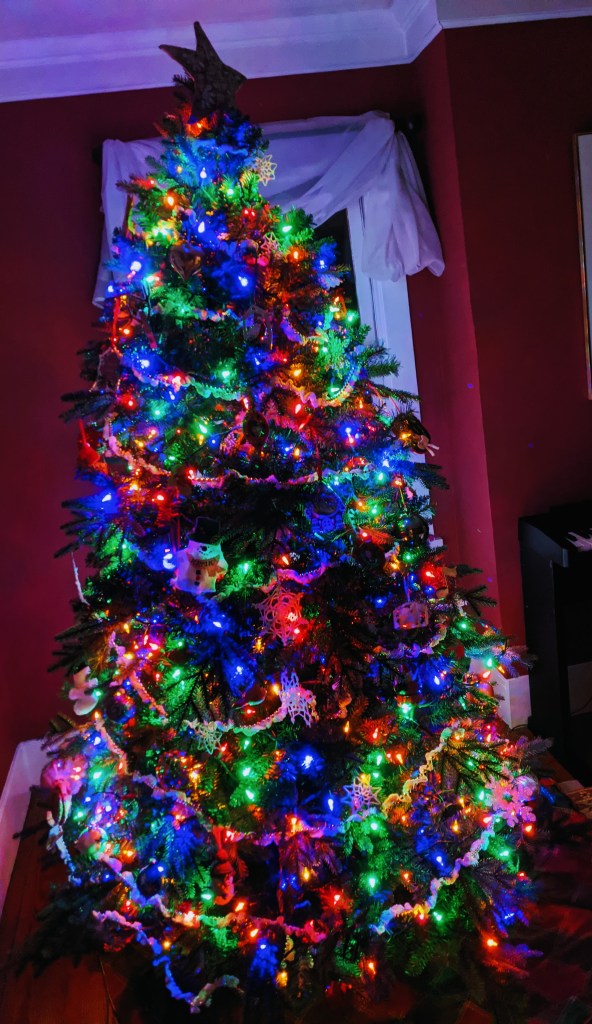
Normally, I’d wait until after Thanksgiving, but the holidays just feel different this year, and I figure in 2020, we need all the joy we can get.
So, I’m cheating a little bit this week and writing about the things I “find” every year when we unpack the Christmas boxes and haul out the holly. I love decorating for Christmas, and so I always like to take a little extra time to look through my collection of Christmas-y things and appreciate them.
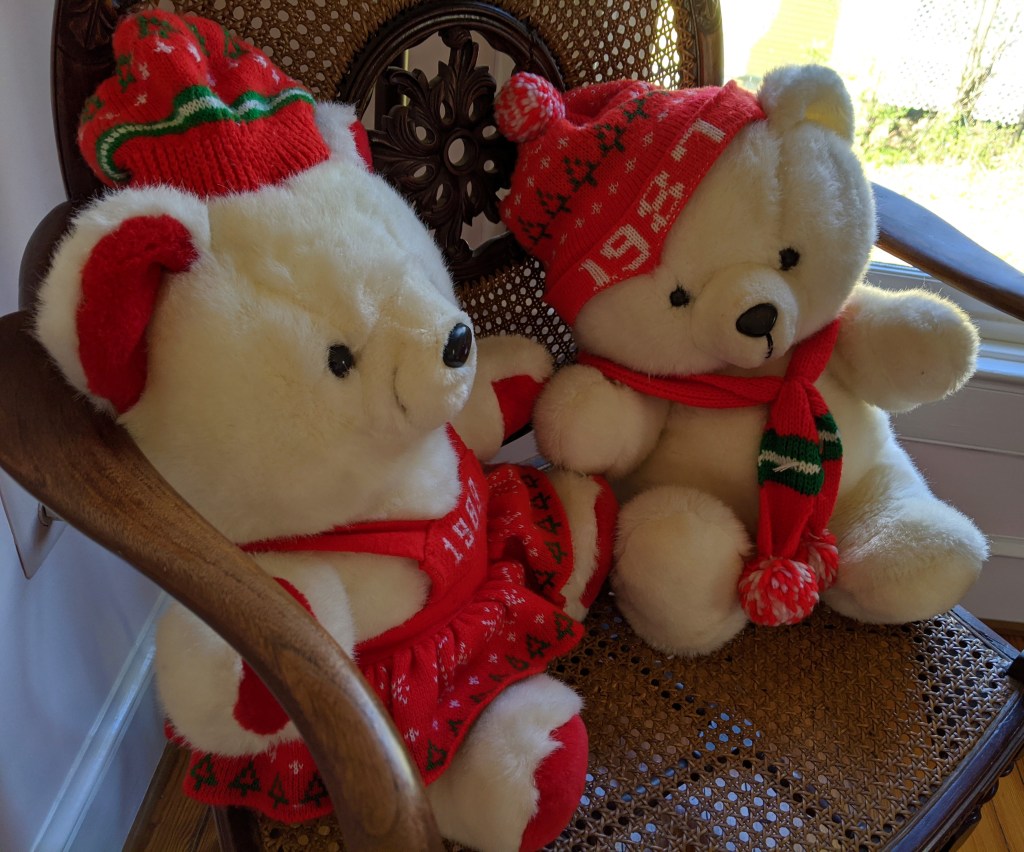
The first items I always unpack? My Christmas bears.
I’m not really sure where they came from, but I’ve had them forever. My mom says she thinks she bought them for me, but let’s face it, 1987 was a long time ago.
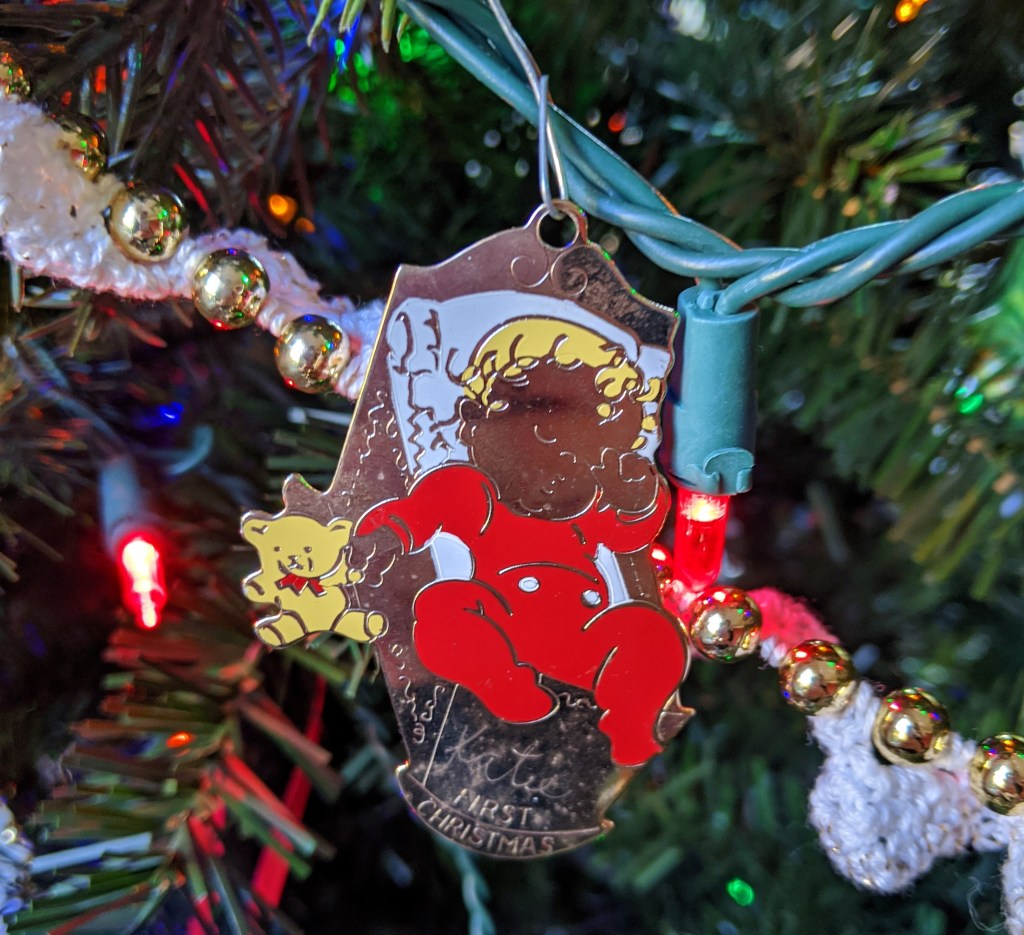
Not so long ago, when I moved into my first place, my mom gave me some of the ornaments she’d collected for me over the years. I have lots of favorites, but I particularly love this one.
It’s my first Christmas ornament.
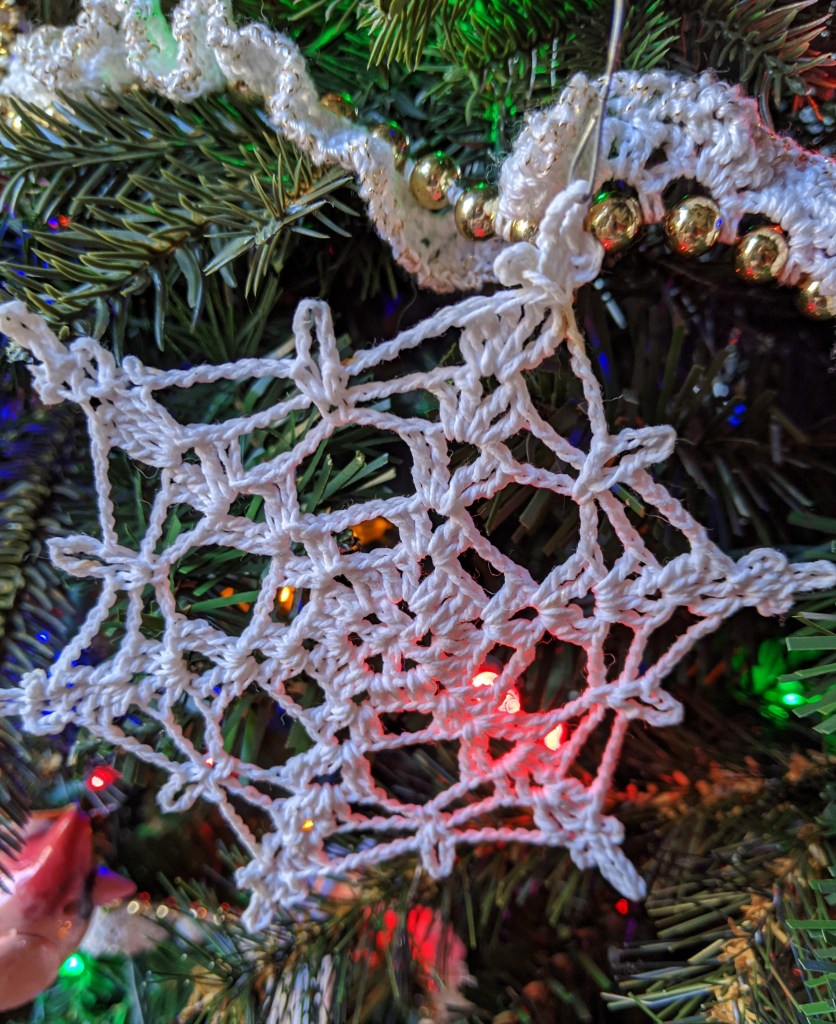
I’ve also got a number of handmade snowflakes that she and my grandmother crocheted over the years.
And a few that I made for her when I was in primary school. This one?
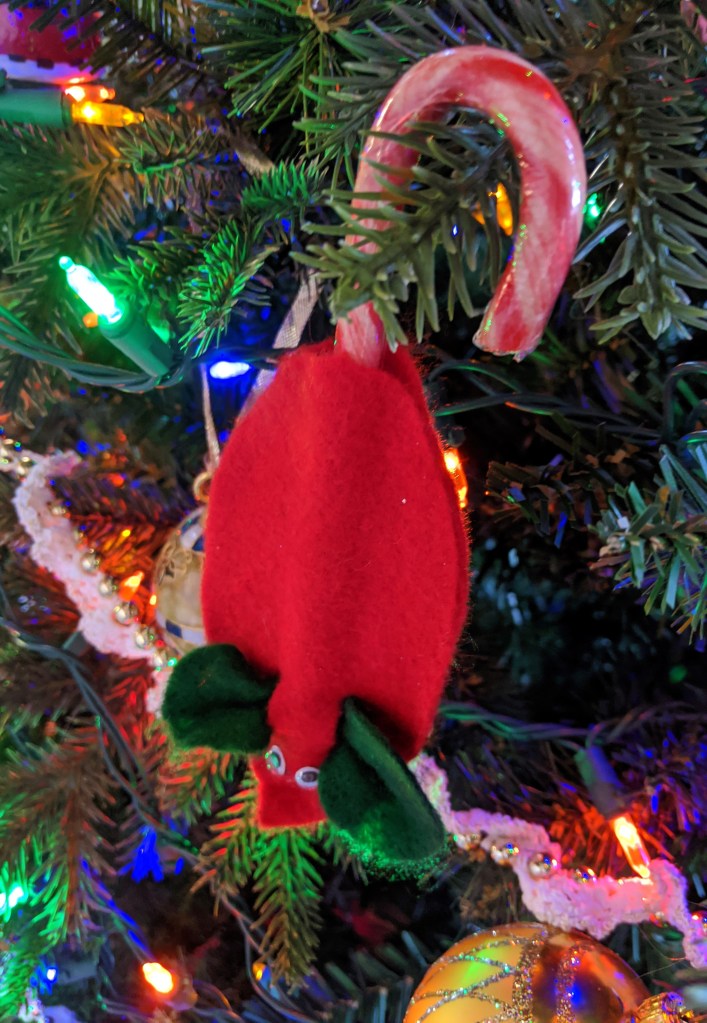
Not sure when I made it, or how old that candy cane is…
Even the garland peeking out here and there in these pictures is an heirloom. My mom made it for me the first year I put up my own Christmas tree.
When my husband and I got married, I felt so honored and happy to be able to include his special ornaments. I love this one, which looks like his first dog, a little Sheltie called Daisy.
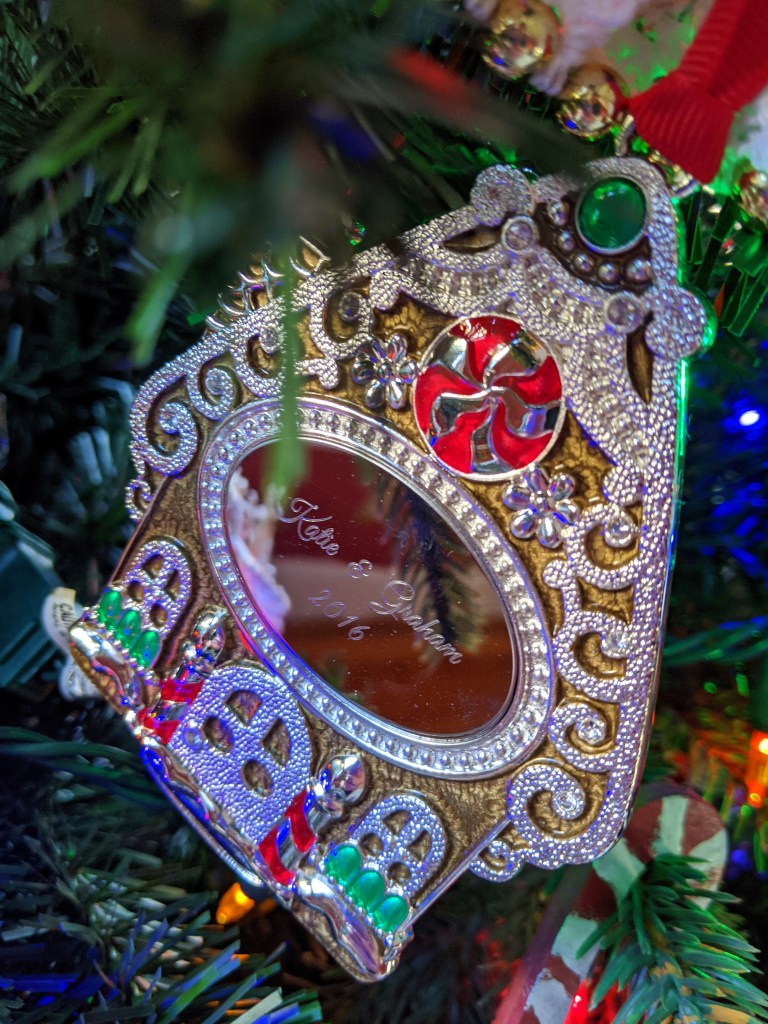
And we’ve also started our own collection. We get a new ornament engraved every year. This is the one we got in 2016, our first Christmas in the new old house.
It felt appropriate.
I love that every year at Christmas, I get the opportunity to showcase all of these little treasures. The memories they carry are precious.
*A quick note – I’ll be taking a break next week for the holiday. Check back on Monday, November 30th, for this month’s short story. In the meantime, I wish each of my readers a lovely weekend and week, and, to my American crew, a wonderful (and safe) Thanksgiving!*
This time last year, we were prepping for a big Thanksgiving with my husband’s family, and a quick trip right after to Las Vegas.
We stayed busy. We saw EVERYONE. Hugs all around.
And I got to see the Grand Canyon for the first time.
We came home exhausted.
This year? Well, we’re exhausted. We’re in the middle of self-quarantining for fourteen days, so that, if we’re still healthy and they’re still healthy and none of us has had any known COVID exposures or symptoms, we can see my parents over the holiday next week.
Just my parents. No large gatherings. I don’t even know if we’ll make the traditional dinner.
Yes, so far, the holidays feel very different this year. But, as I look forward to next week, whatever we end up doing with ourselves, I am thankful.
I’m thankful that my family is healthy, and that I’m healthy. I’m thankful to have money coming in, and food on my table, and a roof over my head, and books. I’m thankful for books, always. I’m thankful to have time to write and to rest. I’m thankful for the sun in the morning and the moon at night and for a world that just keeps turning even in the midst of chaos and crisis.
2020 hasn’t been the year I anticipated, but it’s the year I got, and I’ve tried to be as grateful and happy as possible for every little thing that’s good. And where I can, I’ve tried to make good things happen.
Which is why it’s November 18th and I’ve already put up Christmas decorations.
No regrets. It was the right choice. What can I say? This year’s been all about finding joy even in the darkest of times.
It’s been hard. It will likely continue to be hard. But I’m here and I’m healthy and my loved ones are, too. And in 2020, that’s plenty to give thanks for.
Light and Shadow: We are made of both, and we choose how they balance. Each moment a call – to break or create, arms or alms, hate or a hand, action or none. This power is ours. Light or shadow, growth or fallow, only we choose.
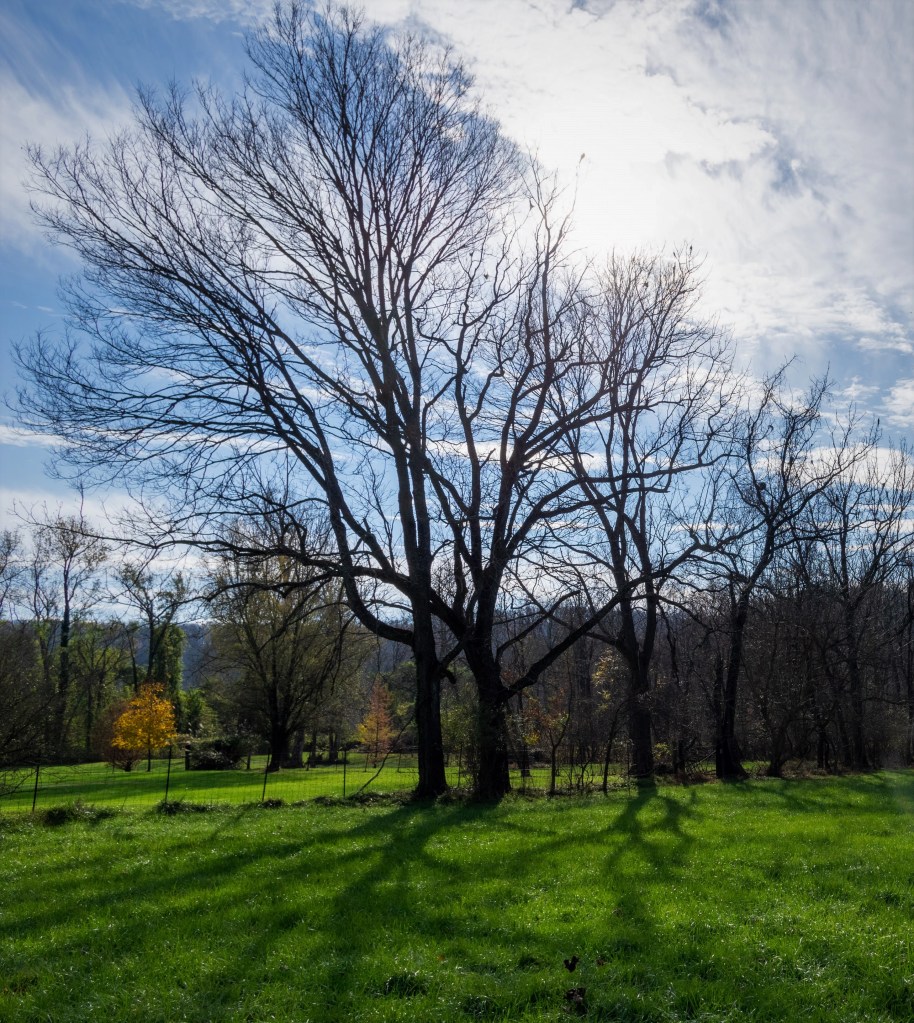
I’m not quite sure when it happened, but it’s looking sort of wintry outside.
It’s still not too cold, but the branches are pretty empty, and there are only a few pops of fall color left.
Our honey locust had a rough summer, but it’s putting on quite a show right now.
The reds and golds have been particularly bright this year.
I’ve always loved every season, and usually, by the time one comes to an end, I’m ready for the next. I’m looking forward to the cold, and maybe, hopefully, the snow. But for now, I’ll enjoy these last days of autumn.
Veteran’s Day always makes me think of my grandfather, my favorite veteran.
He died in 2015. He didn’t talk much about his service, at least not to me. What little I do know, I’ve learned from my mother, and I’m always trying to piece it together in stories, because those are all I have left of him now. I wonder how many grandchildren could say the same thing.
Here’s something I wrote not long after he died. I thought I might include it in a larger work (that still isn’t done, and might never be).
Some of it’s true.
************
At a fork in an old country road, surrounded by rocky fields and green mountains and flanked on both sides by cracked pavement, sits an old white farmhouse. Its shutters and clapboard are going grey, its chimney is crumbling, and any reminder that it used to be part of a functioning farm is long gone, replaced by overgrown patches of wild onions and cattails. There’s no sign now that it ever housed a family. This is the house where my grandfather grew up, nestled outside of a small Appalachian town.
The land is called Hell’s Half Acre, and my grandfather knew, when he was a boy, that he’d have to work it. Walking home from school, a satchel of books swinging in his hand, he wondered every day if it would be the last he’d make the trek. And one day it was. He left school in seventh grade, a servant to the farm. It was that, he told my mother, or be sold to another family, one with the resources to afford another mouth to feed. Instead, he used his hands to work. Evenings on the farm, and days underground, laying wood for mine shafts. And each day, he’d stare at the fork in the road, and wonder if he’d ever get to choose any direction at all.
“When I grow up,” he said to himself, eating dinner at a quiet table full of tired, hungry people, between gulps of buttermilk and bites of toasted biscuit, “when I grow up…” He didn’t dare dream of that time. Dreaming felt hopeless, not an escape but a trap, a long, dark tunnel with no light at the end.
Then, when he turned sixteen, there came a war.
“I’m going to sign up,” he said to his brother, and he did. He lied about his age, though not by much, and found himself on a train west, to basic training somewhere in the Dakotas. And then a ship east, to Africa. And then a ship north, to Italy. And it was there, sleeping in empty towns and eating blood-spackled bread, that he met a girl. Sort of.
Back home, my grandmother was reading books by flashlight every night, hiding under her covers from a father who thought women shouldn’t read and a step-mother who wore her dead mother’s clothes. Sometimes, in the quiet, heavy darkness, my grandmother would talk to her sister, who died when they were both very young, because she had no one else to talk to.
“Lucy,” she’d say, “when I grow up…” And she’d pause. “When I grow up…” And she couldn’t finish the thought. When she grew up, she would be some man’s wife, some child’s mother, and finally some graveyard’s newest coffin.
And then one day, she sent a picture and a letter to a soldier from the county, off fighting in a war that involved the whole world. And it changed everything.
The night we moved to Glenmoor Farm Estates, there was a windstorm. The biggest, loudest windstorm I’d ever heard. It shook the windows, rattled the plastic shutters against the siding, thrummed against the door frames and snapped and tore through the flimsy new-growth trees in our front yard. And it blew over the empty dirt field around us in gusts so ferocious and powerful it felt like a living thing. Like a monster, a giant come down from the sky to wreak havoc and eat humans and spread chaos and destruction in its terrible wake.
My dad tells me it was just a little wind, but I remember it differently.
I was ten when we moved in. I was “too old” to be afraid of silly things like wind and giants and the dark, but then, you’re never really too old to be afraid, are you? We’d been living in a row house close to the city. My little sister and I had shared one of the two tiny bedrooms, and when my parents found out that we would have a new baby brother or sister – it turned out to be both, and they’re too young to remember the move – they told us it was time for a bigger place. So off to the suburbs we went, the four of us soon to be the six of us, out into the wild, as far as I was concerned.
Our old neighborhood was tight, close, and full of other kids. We’d walk to the basketball court, or the pool, or just around on the sidewalk, and we’d bring frisbees and yo-yos and chalk and cards. We’d play and talk and hang out until dinner, or until it was time to do homework or chores. I knew my neighbors, all of them by name, and all of them knew me, and the busy streets felt alive and awake and real.
The new house was different. It sat on a quarter of an acre, massive to us, on a street called Ashwood Terrace. It had more space than we needed, a kitchen larger than our entire row house, and granite countertops. You could turn on the fireplace in the second living room with a light switch. Wrapped in neat, white siding with dark blue shutters, and a small porch at the front, it looked like a quaint little farmhouse straight out of a storybook.
But to me it felt hollow and huge, like a cave. And like a cave, I imagined it was the perfect place for something monstrous to hide, to wait for you and grab you and drag you away.
“You’ll get used to it,” my mom said, as she unpacked boxes in my new bedroom. “It’s just different, but it won’t feel different forever.”
“But…”
“I promise. And please be careful not to talk like that in front of your sister. She’ll get scared.”
I was already scared. And it wasn’t just the house. The neighborhood was brand new, unfinished, and quiet as a graveyard. No cars parked on the streets, no kids running around to play with. No one had any interest at all in getting to know each other. Everyone just stayed in their houses most of the time, and no one talked to anyone else. I remember, once, trying to greet one of our very few new neighbors, a woman walking her dog near our front porch.
“Hello,” I’d called, and waved with the vigorous intensity only a child can muster for a stranger.
In reply, I’d gotten a stare. Just a blank, indifferent stare. And she’d walked away without even raising her hand.
Glenmoor Farm Estates used to be a family farm, an old one. The builders had demolished the old family home, the barns and sheds, had drained ponds and leveled corn fields, meadows, and pastures, and chopped down acres of forests. They’d eventually replace all of it with custom-built, luxury houses like ours, but they’d only finished six when we moved in, and the emptiness of it stretched out around us, an endless, bare landscape of brown dirt and blank space. I’d never seen the kind of dark it got at night, and in the dark, that empty space played tricks on me. Or, at least, that’s what my parents say.
It started the night we moved in, the night of the windstorm.
We were all tired from the day. We’d finished packing the last boxes that morning, had loaded the rented moving truck ourselves, and we’d spent hours unpacking. We didn’t have that much stuff, really, hadn’t had space to have that much stuff, and what we had didn’t come close to filling the rooms of the new house. But we’d all felt overwhelmed and exhausted by the time the sun went down. We ate peanut butter and jelly sandwiches – we couldn’t find any restaurant that delivered to our new neighborhood – and went to bed early.
The wind picked up as my mom and I made up my bed for the night, my first night in my own room, without my sister, in six years. I couldn’t remember a time without her crib or her bed beside mine.
“It’s loud,” I said.
“I know,” she replied.
“It’s really loud, Mom.”
“It’ll pass,” she said. “Just try to ignore it. All new houses have funny new noises.”
I stared out the window as I changed into my pajamas. It was dark outside except for the scant light from a full moon, veiled in thin, wispy clouds.
In the moonlight, out in the field behind us, the wind kicked up whipping curtains of dirt and dust. And something else, something like a figure, dancing, twirling and turning in quick, fluid movements. And that figure became two, and then three, and they linked themselves together and weaved and twisted and bent themselves into sharp, unnatural angles.
“There’s someone out there!” I pointed straight ahead. “Mom, there’s people out there!”
She looked out the window with me and said, “That’s just dust, honey. It’s okay. It’s okay to be scared in a new place.”
The wind blew again, a powerful, heavy gust, and I heard a scream in the distance.
“Mom,” I shrieked.
More screams echoed my own, high and sharp, like frightened children. Like me.
“It’s foxes,” my mom answered. “Remember we told you there used to be lots of foxes here?”
“It doesn’t sound like a fox. It sounds like a person.”
“Okay, bud,” she said. “I know you’re scared. I know this is different. But you’re going to have to be a big kid tonight and be brave. I promise there’s nothing out there. It’s just your imagination.”
She put a firm hand on my back and ushered me to the bed. She tucked me in, kissed my forehead, and turned off the lamp on the side table.
“Mom,” I said, “can’t I leave it on? Just for tonight?”
“Okay, sweetheart. But just for tonight.” She blew a kiss as she stood up and walked out the door, pulling it half-closed behind her. “I promise you’ll feel better in the morning.”
I listened to the wind for hours. Every time I closed my eyes, I imagined the figures dancing in their wild circle, or the screams that sounded like murder victims. I tossed and turned. I counted sheep. I finally drifted off at what I thought must be after midnight, and I dreamed. I dreamed of the dirt field in the dark. I dreamed of voices and dancing, and of foxes. And I dreamed of a white ball of light, a solitary flame out in the middle of the darkness, and the light wanted me to come to it, to meet it and to follow it.
I woke up to bright sunlight and a quiet, still morning. I pushed my covers away and lifted my feet out of bed. I saw brown smears on my new white sheets, streaks and spots where my feet had been. I lifted up one foot onto my knee, cradled it in my trembling hands. I think I knew what I’d see. The bottom of my foot was caked with dirt.
Looking back, I think that was the first night I sleepwalked. It wasn’t the last.
I told my parents over breakfast what I thought had happened. I told them about my dream and the dancers and the screams, and I showed them my filthy feet. My dad found a strip of jingle bells in a box marked “X-mas,” and he hung them on the door handle outside of my room.
“This way,” he told me, “if you open the door at night, we’ll hear it. Don’t worry, kiddo. If you sleepwalk again, you won’t get far.”
“But I don’t want to do it again, ever!”
“You’re just getting used to the new place,” he said. “I bet it stops as soon as you’re settled in.”
“But what if it doesn’t?” I bit my bottom lip, looked up at his face.
“Then we’ll take you to the doctor. It’s going to be okay, buddy.”
I didn’t feel like it was going to be okay.
Over the next week, we learned to live with the constant hum of construction noise. The rhythm of hammers and the keening of table saws became our alarm clock. Not that I needed an alarm clock. I didn’t want to go to bed at night, begged to sleep in my parents’ room, and I got up each morning as soon as I saw the first hint of sunlight.
“You’ve never been a morning person,” my dad said one day, as he drank a quick cup of coffee before work. “New habits for a new place, huh, kiddo?”
“Yeah,” I muttered into my cereal.
Down our street, yellow wood frames sprang up like weeds. Rows of bright green sod blanketed sections of the ground. The deep technicolor of the new grass looked wrong against the barren dirt behind us, but my dad said soon there’d be houses back there, and probably plenty of kids to play with, and that we were lucky to have bought in so early.
“We get to see it all happen,” he said, with a big smile. “We’re like pioneers.”
And I suppose we were, in a way. Out alone in this desolate landscape, waiting for the promise of new life and new adventures. I understand why it all made my dad excited. It made me uneasy, to look out my window and find only a dark, empty void.
For the first time in my life, I noticed dark circles under my eyes. I couldn’t focus on anything. I fell asleep at my desk on my first day at my new school. The teacher sent a note home, and my mom sat down on the edge of my bed that night.
“Do you want me to sleep in here with you?” She looked tired herself, and worried. A deep wrinkle carved itself into her forehead. She brushed a stray bit of hair away from my cheek.
“Okay,” I said.
“I know you’re scared, but you need to sleep. I promise nothing’s going to get you. Okay?”
“Okay,” I said again.
“Okay,” she answered back, and snuggled in beside me.
In the warm cocoon of her arms, I finally slept deep and sound for the first time in days. And I dreamed.
I dreamed of women in delicate white dresses. They swayed and whirled in a tight circle, their hands laced together, and they yelped and cried as they danced, and those cries became screams. Screams like frightened children. In the middle of their circle, the light shone bright and steady, and it beckoned me, called to me the way a mother calls to her children, welcomed me. And I listened. And as I made my way to it, the women stilled and turned, their eyes as black as the night around us, their mouths stretched into thin, hungry smiles. They waited. I kept moving. I needed to reach them, to get to the light. I needed it as much as air in my lungs and food in my belly.
I woke up to my mother’s arms around me, to her panicked face and her frantic cries.
“I woke up and you weren’t there! Oh, honey, I was so scared!”
We stood in the back yard, right at the edge of the grass. The field loomed in front of us.
My parents argued constantly for the next week. They tried to hide it behind closed doors, but I heard them.
“…need to see a doctor, as soon….” My mom.
“…going to be fine…settle in….” My dad.
“…not normal…not safe….” My mom again.
They compromised. They installed an alarm system. It would sound the second any exterior door opened, and it was loud. It hurt my ears when they tested it.
“If you sleepwalk again, you’ll wake the whole neighborhood,” my dad said. “And it’ll probably wake you up, too.”
We’d lived in the new house for two weeks at this point. All of our boxes were unpacked, and my mom had started filling rooms with new furniture, with decorations and pictures and scented candles. She’d chosen expensive curtains and had painted most of the rooms in warm, calming colors. To anyone else, it would have looked like a home. To me, it still felt foreign and hollow.
“We’re going to paint your room tomorrow,” she told me, on a Friday night after dinner. “I picked your favorite color, and I have a surprise for you, too.”
I crawled into bed that night wondering what the surprise might be. Maybe a TV. Or a bean bag chair. I’d always wanted a bean bag chair, and she’d always told me we didn’t have room. At least that wasn’t a problem anymore. I wonder, now, if she’d planned something nice all along, or if she was only reacting to how scared I was, how much I was struggling.
I turned my lamp off and closed my eyes tight. I willed myself to sleep. My mom had installed a nightlight to help me feel safe, and it shined steady, like a beacon. Outside, the wind began to blow. I kept my eyes closed, counted down from ten over and over, and eventually, I fell asleep.
And I dreamed. But tonight, the dream was different. The dancers stood straight in a line, their black eyes fixed on me, their arms outstretched and their palms turned up. The white light flickered in front of them, dim and uneven, but still calling, still pulling me in, beckoning me out.
I woke up in the field.
The women stood in front of me. They were there, and solid and real, and I knew if I reached out and touched them, my hand would meet solid, real flesh. And I knew that to do that would be dangerous, deadly even. The light went out, and they stepped toward me, reached for me with fingers as crooked and mottled as tree limbs. I could hear the wind blow through their hair, crackling, like dry leaves in the fall. I could hear something else too, something high-pitched, artificial.
The alarm. I could hear the house alarm, just faintly, but I could hear it. Home wasn’t out of reach, if I could just make my legs work. But I couldn’t. I just sat there, frozen, whether from fear or something else, something even more powerful, I don’t know.
The women moved around me, encircled me, and I screamed. I screamed and it matched the pitch of the alarm. They locked hands, began to sway and bend and stomp, and move closer and closer, until they became a wall between me and the world, between me and home. And as they danced, they hummed. The hum mingled with the sound of the wind.
And then it stopped. All of it. Arms wrapped around me, lifted me up.
“…scared us to death,” my father said. “Let’s get you inside and get you warmed up.”
Wrapped in his arms, my chin propped against his shoulder, I looked out at the field as he carried me home. It was empty, save for one wood frame, the beginnings of a new house, the first of many.
I didn’t sleepwalk after that night, and I haven’t in all the years since. The neighborhood grew, and more grew around it, and soon the whole area became a sea of roads and houses, of traffic and people and noise. There are no old family farms left.
I wonder, now, if it was all in my imagination. But it doesn’t really matter. The things we fear, and the things we remember, all of our stories, they’re real to us. Whatever happened to me, those first days in that new house, it’s no less real than anything else, and whatever it was, it didn’t get me.
My dad says the night we moved to Glenmoor Farm Estates, I scared myself into sleepwalking. I remember it differently.
*If you haven’t read last week’s Found Friday post, this one won’t make a lot of sense. So, you know, mosey on over and do that real quick.*
If you look to your right heading west on John Mosby Highway, just past Gilbert’s Corner, you’ll see a house. Or, it used to be a house. It’s only a ruin now.
It has been for a long time. I’ve heard it called the most haunted house in Loudoun. And I’m pretty sure Frank Raflo wrote about it.
I can’t be certain, but the details line up pretty well. And I confess, the first time I read the story of the day he explored an abandoned, crumbling ruin of a reportedly very haunted house near Gilbert’s Corner, I didn’t know the area like I do now, and I didn’t really put the pieces together. I got it this time.
Mr. Raflo didn’t sense any otherworldly goings-on during his brief visit – in fact, he says he felt quite comfortable and at peace – and wasn’t able to confirm any of the stories he’d been told. And now that the house is basically only an empty shell, I wonder if we’ll ever really know whether it’s haunted or not.
At least we have the stories. And judging by the condition of the place, soon enough, they’ll be all that’s left of it.
P.S. – If you happen to live in or close to Loudoun County and you like exploring abandoned places, a brief disclaimer: This house is on private property, and there are no trespassing signs posted, so please don’t go poking around where you’re not welcome. It’s easy enough to take a picture from the road.
P.P.S. – I know I promised that my short story for October would be posted on Wednesday. My apologies! It took a bit longer than I anticipated for all the pieces to fit into the puzzle just right. It’ll be up tomorrow, just in time for Halloween.