They say,
“Nothing ventured, nothing gained,”
and knowing I can choose,
I’d certainly rather venture,
even if it means I lose.
See, it so happens that
I know a little something
about nothing,
that sad default,
that frustrating non-finish line.
Nothing:
What I say when I can’t find the words.
Nothing:
What I do when the world is too much.
Nothing:
What changes when I don’t.
Nothing,
safe though it may be,
just isn’t enough
for me.
creative writing
Dog Days (A Summer Poem)
The longest of days,
high sun, heavy heat,
and the creeping feeling
that a storm’s on the way.
Summer greets the world,
slow and hazy,
fierce and free,
all promise and no rules,
except these:
Be ready for anything,
and bring bug spray.
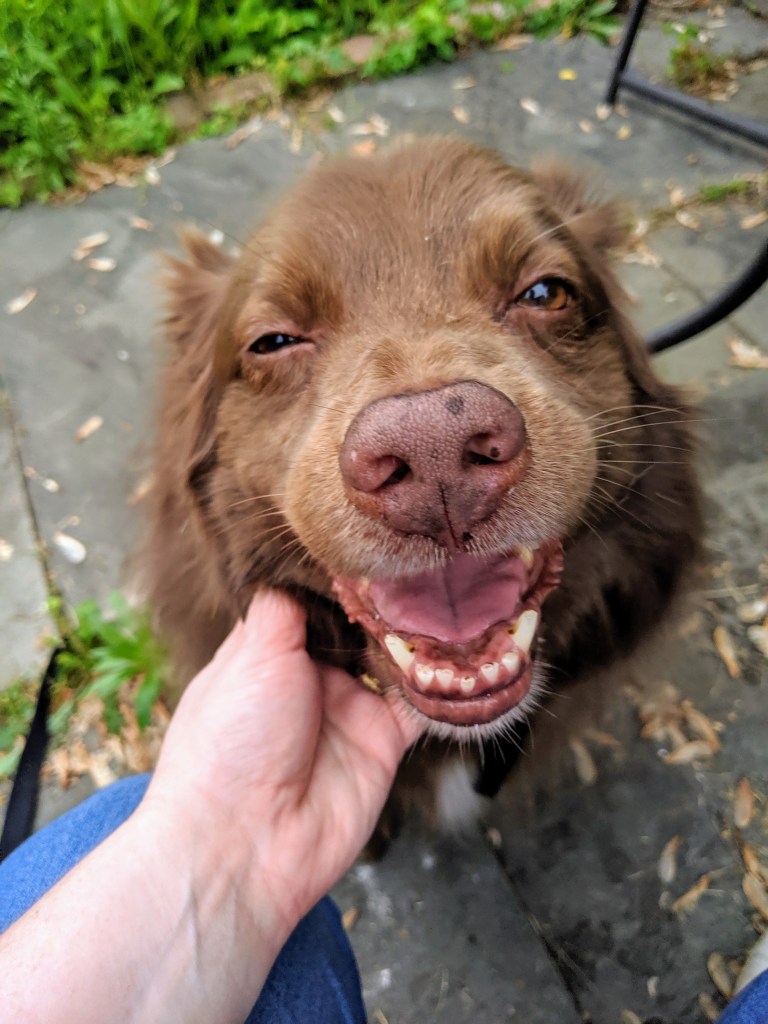
Everyone’s Friend (A Father’s Day Poem)
Music maker,
dreamer,
driver,
fearless motorcycle rider,
and friend to everybody:
That’s my dad.
Dad, you gave me
rhythm and time,
and you made your story part of mine.
You taught me how to live free,
(but with responsibility)
and to love fiercely
(but smartly, too).
Bold and kind and clever,
you gave me the best parts of you.
Forever isn’t long enough
to be grateful.
But it’s what I can do.

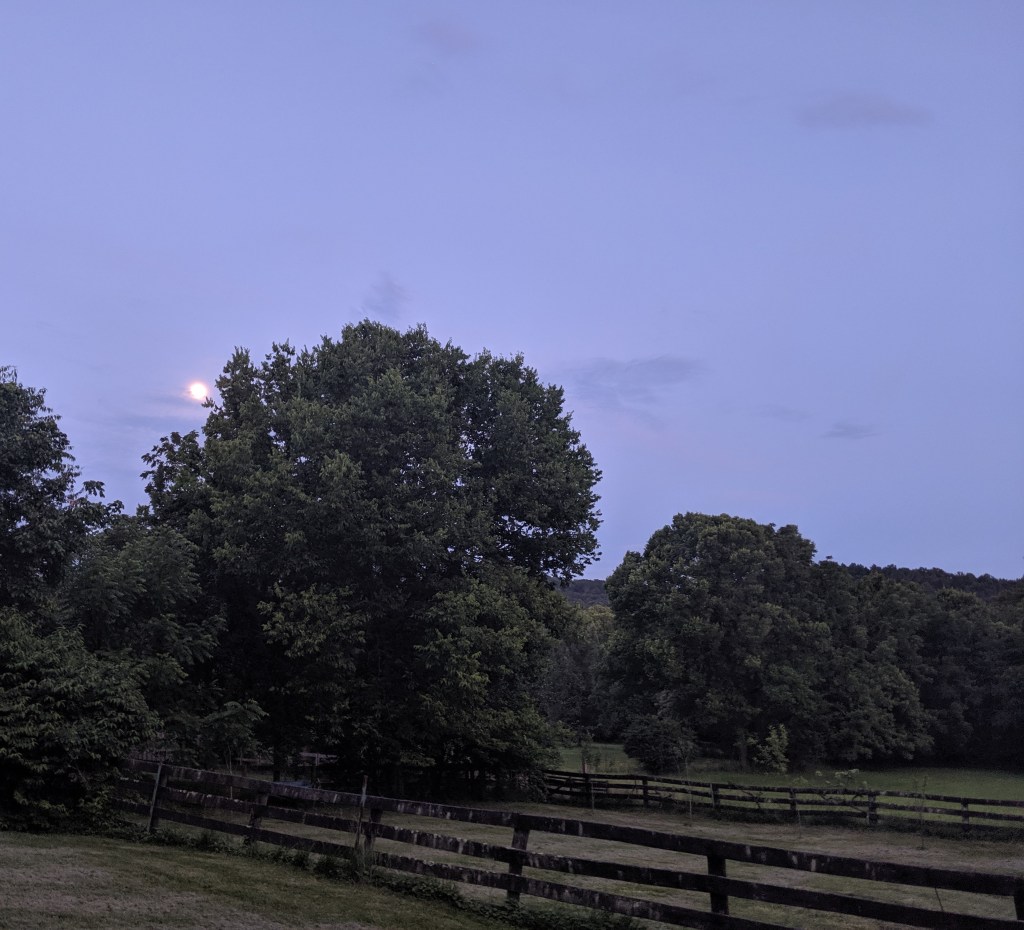
Summer Sunsets (A Poem)
If I could choose one moment,
just one to keep forever,
it would be a sunset in summer,
that gentle turning of day to night,
when the sun and moon trade places
and the world sighs itself to sleep.
Happy Place (A Poem)
On summer days,
my happy place
is not a beach
or mountain path.
It’s so much more
(or less)
than that
(depending on
how you look at it).
My happy place, when
the weather’s warm
and the days and nights
are long and quiet,
is by your side
wherever you are.
My happy place
on summer days
(and winter, fall,
and spring days, too)
is a whole world:
me and you.

True story, y’all…
My mom and I were having a funny conversation a couple of weeks ago, talking about how stubbornness runs in the family. Like, both families. My dad’s and my mom’s. And so I come by my stubbornness honestly, and I told her that. I added that out of the three of us, I thought I was probably the least stubborn, and my dad was the most. She said she’s much less stubborn than me. I told her she’s absolutely more stubborn than I am. (Though we both seemed to agree that my dad is the most stubborn of all of us, so there’s that, I suppose.)
This (good-natured) back and forth went on for a little while, and then Graham (poor Graham), came upstairs to make a cup of coffee. So of course, I asked him to settle the matter and declare which of us – my mom or me – was the least stubborn.
“Your mom,” he said. “You’re so much more stubborn than your mom.”
She burst out laughing. I objected. The conversation eventually moved on.
And then I sat down today to write a poem for the blog. I wasn’t even thinking of the stubbornness conversation. Honestly, I was sitting in my chair looking outside at the sunshine and the cardinals in the yard, happy as a clam.
But, well, this is what I wrote:
Please, by all means,
tell me I can’t.
There is no better way
on the face of this planet
to ensure that
not only can I,
I will.
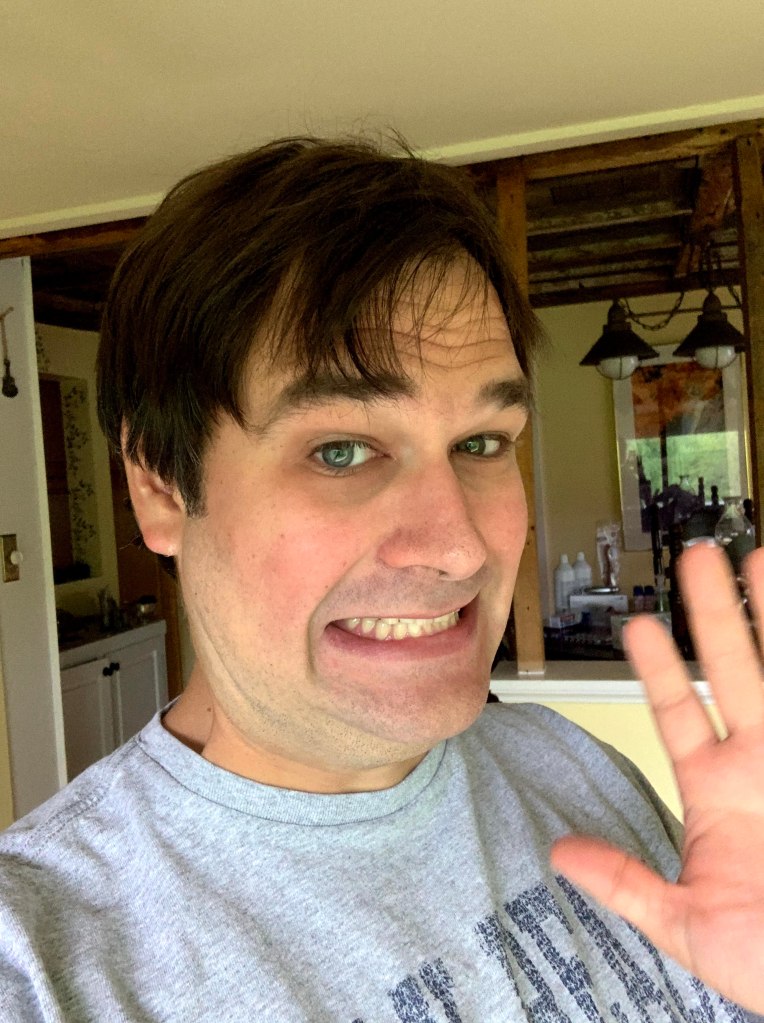
Y’all, I think Graham may have been right…
The Return (A Short Story)
*This story’s a sequel to last year’s May story, “The Bridge.” I’ve never written a sequel before, but every time I sat down, I just couldn’t get Allie and Michael out of my head. I don’t know if, even now, they’re quite done with me. We’ll see, but in the meantime, enjoy!*
–The Return–
It’s May, almost June. It’s hot. The leaves, just grown and bright green, already droop and sag and wilt and wrinkle under the blistering sun. I have not missed this. I dread more days of it, while we’re here.
“Supposed to hit 100 today,” says my brother.
I prop my head against the window. With the air conditioning blowing so close to it, for just a second, it feels cool against my sticky skin.
My brother drives. I count the road signs. And together, we make our way home.
There’s somewhere I’m supposed to be.
The thought hit me out of nowhere on the flight here, and it won’t let go.
Of course, I tell myself, there’s somewhere I’m supposed to be. We’re going home together from our separate cities, to visit our sick father and divide up assets in the house where we grew up. The only thing my brother wants is Dad’s old red and white Ford truck. That should make things easy, because the only thing I want is to get this over with.
I don’t want anything, is what I’m saying.
I’ve never been a collector. I don’t like being weighed down with stuff. My corner apartment is constantly filled with sunlight, the constant, churning whirlpool of my anxiety, and little else. Clutter makes me nervous. I just want to see Dad, hug him, and say goodbye.
“Allie…”
I jerk my head upright. I’d started to doze. I feel a trickle of warm drool on my chin.
“You’re supposed to be watching for the exit,” Michael reminds me.
“You’re not going to miss it,” I answer, because he won’t. I wouldn’t either.
The pull of Dad’s little red brick ranch-style house tugs at both of us, always. It’s brought us back together over and over. It’s brought me here from London now, and Michael from Seattle, that modest house in the middle of a nowhere neighborhood outside of a nowhere town. It’s hooked us both.
It will be the hardest thing we talk about, this weekend: What we’re going to do with it.
Dad’s house saved our family after our mother died. It kept us whole and safe, gave Michael and me a place to explore. It made Dad a handyman, a gardener, and a better father. But at the end of the day, it’s four walls and some windows, two doors and a bedroom that doesn’t belong to me anymore.
There’s somewhere I’m supposed to be.
I look over at Michael, his face as serene and still as a sleeping baby, and wonder what he’s thinking.
I ask instead, “Should we stop for gas before we hit town?”
“No, we’re good,” he says. “But if it’s okay, there is one stop I’d like to make.”
I know where he’s taking us. I don’t have to ask.
There’s somewhere I’m supposed to be.
We’re thinking of the same place, a dirt path and a bridge, a fork and two sycamores, and a house that’s always there but never the same. When it’s even there at all.
On the tip of my tongue, I can almost taste strawberry ice cream. And in the pocket of his dark wash jeans, I’m certain Michael has stowed away a hand-carved wooden fox.
We’re not certain, haven’t been in years, if the people we met and the house we visited ever really existed. We were sad kids, motherless too young, trying on a whole new life. Did we make it up?
Does it even matter?
We’ve talked about it a few times in the decades since, but only with each other. Who would believe us, when we’re not even sure we believe it ourselves? And again, does it even matter? It brought us together when we were lost, gave us a mystery, left us feeling touched by magic. We’re lucky, I think, even if we’re delusional.
“Do you really want to know if it’s not there?”
We’re at the exit now, and Michael turns the wheel a little too sharply. The car lurches around the turn before we settle onto the winding road into town.
“It’ll bother me forever if we don’t check. Who knows if we’ll ever come back here, once Dad’s gone.”
He’s not wrong, but, “What if we made the whole thing up?”
“Do you really believe that, Allie?”
I shake my head. No, I think. But maybe.
There’s somewhere I’m supposed to be.
My hands start to tremble.
“We’ll be fine either way,” I say.
But my voice gives me away. It trembles, too. I don’t know why I’m nervous.
We drive through town, a still charming collection of turn of the century store fronts and tree-lined sidewalks. This town never changes. It just gets older. We turn onto the gravel road that will take us to Dad’s house. And to the dirt path, too. At least, I hope it will. Michael pulls over at a wide spot, and for a moment, neither of us moves.
“We could just go on,” I say.
“Fraidy-cat,” he calls me.
“You’re being mean,” I tell him.
I open my door first. I am not a fraidy-cat, and these days, neither is Michael. He jumps out faster than I can, and comes around to my side. Together, we walk.
And suddenly, there it is. Michael notices it first, and quickens his pace.
“It’s here,” he says, and in his voice, I can hear relief.
My feet won’t move.
There’s somewhere I’m supposed to be.
“Michael,” I whisper, careful to control my tone, to hide the frantic hitch in my throat “I think we should just go on to Dad’s.”
“Allie, I have to know.”
“Why? Why is it so important to you?” I ball my hands into fists. I fight the urge to raise them to my chest, to plead with him. “What does it change?”
“I don’t know,” he answers. “I don’t know, but I know I have to do this. I have to find out.”
“I can’t,” I say. I hang my head. I feel the tears coming before they start. I wipe them away before they fall. “I need to go.”
I turn on my heel and beat an unsteady path back to our rented sedan.
“Allie!” Michael is only a few steps behind me.
“I’m going on ahead,” I manage. “You can walk to Dad’s from here.”
There’s somewhere I’m supposed to be.
“There’s somewhere I’m supposed to be,” I finally say, out loud, “and it isn’t here, in the past.”
I stop and turn to face my brother. His chin is high, his brows are set and his mouth cuts across his face like a thin blade. He won’t budge on this. Neither will I. We’re stubborn, both of us. Who knows which of us is right.
“Fine,” he finally bites out.
“I don’t want to know what you find,” I tell him. “I’ll see you at Dad’s.”
He leaves me by the car.
There’s somewhere I’m supposed to be.
I get in, turn the key, and drive forward.
************
Thank you for reading! This is the fifth of twelve stories I’ll write as part of my 2021 Short Story Challenge. Twelve months, twelve stories, and the theme this year is: Home.
Here are the first three stories, if you’d like to read them:
And if you want to join in the fun, here’s more information. I hope you do! But just reading is good, too, and I’m glad you’re here!
The next story will be posted at the end of June.
A Poem for Meg
“What lovely flowers,”
I say,
and what I mean is:
“I see how much work it took
to create this blissful space.
It’s something I could never do,
at least,
not without significant difficulty.
I appreciate the beautiful things
you’ve planted and nurtured.
I can see the love in your heart,
because you’ve poured it
into these little pink sunbursts,
and all of the others around us, too.
I’m grateful for this time with you
in your garden.”
But that’s a mouthful
and a half,
and we’ve got limited time
this visit.
So what I say is simply,
“What lovely flowers.”
And I trust that you’ll get the message.

I Have My Mother’s (A Belated Mother’s Day Poem)
I have my mother’s eyes.
I have her temper, too,
and her stubborn streak.
(Just ask my dad.)
I have her joy in reading –
not from inheritance, but habit –
and, I hope, also, her kindness.
My mother taught me to laugh,
and grace and patience.
And she gave me part of herself:
years of time,
of being together,
of lessons,
of hugs and of presents,
and of watching her wild child grow.
She gave a million little moments
to build me up.
I have my mother’s heart,
a lifetime’s worth of love,
the greatest treasure.
And she has mine.

Listen, Step Back, and Trust Your Gut (or: How I Wrote My Latest Story)
I thought it might be fun today to talk a little bit about my creative process, and to show you what my latest short story, “Quiet Neighbors,” looked like when I started writing it. This isn’t something I’ve done before, but as I work to make a better routine for myself and eventually, hopefully finish a novel, I think it might actually be helpful to take a better look at how I’m currently operating.
So, first thing – I never really plan ahead, and I usually don’t know what I’ll write about when I open up my laptop and get started. Sometimes, a setting will come to me first. With “Quiet Neighbors,” it was a suburban neighborhood, newly built, without much space between houses (or privacy between neighbors). Sometimes, I’ll hear a voice first. When this happens, I listen. I always like to write from a character-driven place, and so if I’ve got a strong character from the get go, I feel like I’ve already got a head start on the work to come. When “Quiet Neighbors” started to take shape as what it eventually became, it was the narrator’s voice that compelled me to write. I wanted to know more about that character, and how that character perceived and interacted with the world.
Second thing – I try not to force a story to work. There’s lots of advice – and it’s good advice – about forging ahead and writing past blocks, but I find that if a story isn’t flowing, I’m not telling it the right way. When this happens, I like to take a step back, a few days away, and just give my brain time to think and process. In the case of “Quiet Neighbors,” I actually loved what I was building when I started, but something just wasn’t clicking. And so I started to look at it differently, and pretty quickly, things fell into place, I think as they were always meant to. I don’t mean to say that I never push through, and that every story has to flow easily for me actually finish it, but if my gut tells me it’s not right, I trust it.
And now, because I’m sure (or at least, I hope) I’ve made you curious, here’s what “Quiet Neighbors” looked like when I started it. It became something I’m really proud of, but it certainly didn’t start where it ended up, and I have to say, I couldn’t be more pleased about that.
*************
“The Quiet Neighbors”
There are two things you should know. The first is this: We liked them. They seemed like a bright young couple.
They moved in on a rainy day at the beginning of April, one of those gray, not quite cold days when you can feel the spring in the air. We heard the moving truck before we saw it, clunking down the wet pavement, the hiss of rain-slick tires.
We missed the MacKinnons. They’d lived in the big house at the end of the cul-de-sac for ten years before they moved, raised their children alongside all of ours. They hosted a Christmas party every year, they always put out the best Halloween candy and they could be relied on, you know?
Their house sat on the market for longer than anyone thought it would. Almost ten months ticked by filled with a string of showings and open houses, and a couple of times, the house went under contract. We all offered to help. We landscaped the garden beds over the summer and kept the front porch swept. We shoveled the driveway when it snowed. We all wanted to see the house sell, not only because we knew it make life easier for the MacKinnons – they’d moved in with her mother because of the cancer – but because we wanted the best new neighbors we could get. We wanted someone who’d take pride in the house and the neighborhood, just like the MacKinnons had, and just like we do. That’s what makes a good neighborhood. That’s what makes a home.
So the moving truck pulled into the driveway in the middle of an early spring downpour. We’d heard about the new owners from the realtor. A young married couple with no children (yet). They both worked in the city but wanted the space to grow. They had one dog, no cats, and oddly, only one car.
“How do they commute to the city?” That was Mr. Grayson to the realtor.
“They drive in together,” the realtor answered, “and they both get to work from home on Friday.”
“Must be nice.”

