I’ve never felt more
sure and steady.
(Not that I’m asking
for trouble or tears…)
Yes, for the first time
this year,
I think…
no, I know –
I feel totally ready.
creative writing
Sound and Silence (A Short Story)
*I’m apparently making a habit of this. Here’s August’s short story, a little late but hopefully an enjoyable read. I aspire to not be late with September. We shall see.*
It started with the old church piano. I’m not sure how it made its way to our house, but one stormy, late summer day, it arrived via Mr. McCoy’s red and white pickup truck.
“A little serendipitous, isn’t it?” My mother stood in the doorway, watching Mr. McCoy and my father unload it. “It’s been raining all day, and that instrument gets here right as it stops.”
“Mmmm,” I answered, through a mouthful of cherry popsicle.
My sister said nothing. This was not unusual, as Callie hardly ever talked. She could, and sometimes at night, we’d sit together in our room and talk for hours. But she seldom wanted to. She told me once that most people talk too much and don’t say anything. I think I was probably one of those people, and I was fine to fill the silence in her place.
The day the piano came changed everything.
We didn’t have much room in our house, and so my mother decided the piano would sit in the dining room, scrunched against the back wall right behind the table. That first night, Callie stared at it all through dinner. Hard not to, given that it was massive and dark and made that back wall look a little like a cavern. But Callie looked curious, not concerned. At least, to me she did, and I’d like to think I knew her best.
“You can try it out,” my father told her. “Won’t do anybody any good if nobody plays it.”
She nodded.
“If you like it, maybe Mrs. Mavis down at the church can teach you to play.”
Callie nodded again.
As it would turn out, she didn’t need any help at all.
We all turned in that night at about 9:00. Callie went straight to bed, her back to me, and I sat at my desk in the corner of our room, working on a story about an old man I’d talked to outside of the general store. That was the thing with talking – people tell great stories. But Callie didn’t look at the world quite like me, and that was fine. I liked to think about her, to consider what she might be feeling. I liked figuring her out, I guess, and I was good at it.
Sometime later, hours maybe, I heard a rustle from Callie’s side of the room.
“Callie?” I whispered.
I got no answer. At first. Minutes later, I heard the distinct tink, tink, tink of one of the highest piano keys. Then the deep bellow of one of the lowest. I rolled out of bed and made my way downstairs, and in the darkness of that tiny dining room, saw Callie’s back, stick straight. There on the piano stool, for the first time in my life, and in hers, I’d wager, my sister looked right at home. I didn’t say a word. I just stood there in the dark, and watched her plink away. I’m sure my parents heard her, too, but they didn’t get up, and that morning, no one said a word.
I don’t much believe in magic, but I’ll say this: Whatever’s out there in the universe, whatever force exists to make me, me and you, you, it made Callie for music.
Every night for weeks, she’d tiptoe down the stairs, and she’d sit and plink.
“Driving me crazy,” my father would say.
“We should put her in lessons,” my mother would reply.
But Callie didn’t want lessons. She’d shake her head, fast and hard, anytime either one of them offered to take her.
“Why in the world not?” My mother finally asked her one night, whether out of frustration or curiosity I can’t say.
Callie didn’t answer at first. She just stared ahead. And then finally, slowly, she said: “I like the way I feel when I play.”
My mother shook her head – that was exasperation – and trudged into the kitchen to start dinner. But I understood, or, at least, I understood about as well as anybody.
“You feel free when you play, don’t you?”
Callie nodded.
“Like nobody can tell you what to do.”
She nodded again.
“That’s how I feel when I’m writing.”
Callie smiled, and we both went up to our room to do homework.
It was really as simple as that, in the moment. Whatever skill Callie developed at that piano, it would belong to only her. I was a little jealous, truth be told. Teachers were always picking apart my stories, looking for spelling mistakes and grammar errors. But sitting at the old church piano, Callie could be free. And free she was, like an animal in the forest, like a bird in flight. When she played, the rest of the world drifted away for her, and she went somewhere else.
Callie never talked much, but she played.
She played and played, and days became months became years. And as she played, she learned. She could read a page of music like I could read a page in a book, and I have no idea how she figured that out. The marks looked like chicken scratch to me. And she could create her own songs, too, sitting in the dim light on Sunday afternoons, just enjoying the intervals between sound and silence.
I asked her once, just flat out asked, how she decided what notes went with the others, and how she wanted the song to sound.
“I don’t know,” she said. “It just kind of comes to me, I guess.”
“Do you ever write it down?”
“No,” she answered. “Then it wouldn’t belong to me anymore.”
“My stories still belong to me,” I told her.
“In a way,” she said. “But they also belong to the people who read them.”
She was right, of course, though I’d never thought about it that way before. But I wish she’d written down just one song, even just a portion of one song, because when we were eighteen and just about to graduate from high school, Callie died.
I don’t know how else to say it. It’s strange how people sugar coat dying. She was alive one day, and then she wasn’t, and the silence in our house became unbearable. Callie never talked much, but her quiet was a calm quiet. Her music was her voice. And in her absence, in her place, this new quiet felt heavy and hard and sharp around the edges.
“This house just feels different now,” my mother said
It got to all of us, eventually. My father kept the television on. My mother sat by the radio in the kitchen.
“It’s something,” she said. “It not enough, but it’s something.”
And I – I suffered. My escape had always been my writing, but writing’s quiet, too, and I suddenly found that I just couldn’t stand it. I couldn’t stand sitting alone at my desk with only my own thoughts ringing in my ears, surrounded by Callie’s absence and the unbearable stillness she left behind.
And then one night, I’d had enough. I lay in the dark, in the room that now belonged to only me, and I thought, well, there’s only one thing for it, isn’t there?
I tiptoed downstairs to the dining room, and I sat on Callie’s piano stool. My hands shook, but I forced my fingers to the keys, and just like Callie had, all those years ago, I plinked. First the highest notes, then the lowest. Then some in the middle, and then a few together. And finally, I felt some of the tension leave my shoulders, felt my jaw unclench for the first time in weeks.
I will never be the musician that Callie was, but I’ve kept that piano all these years, and I sit down every day, and I play. When I play, it’s like a piece of her sits with me. And in the intervals between sound and silence, I can almost feel her there, whole and solid and alive again.
************
Thank you for reading! This is the eighth of twelve stories I’ll write for my 2023 Short Story Challenge. The theme this year is: Wild.
Here are the first seven, if you’d like to read them:
I hope you join me and write some stories of your own this year! It’s fun, and I hope this will be a happy year full of good stories. But just reading is fine, too, and I’m glad you’re here.
The next story will be posted at the end of September.
I Wish You Water (Another Drought Poem)
Today, I could say
I wish you well,
and in a way,
I do.
I wish you a full well,
and flowing rivers,
babbling streams and
shoes sopping wet with rain.
I wish you well,
and so I wish you water.
I wish for you green, green grass
and heavy, rustling leaves.
I wish you clouds and fog,
evening storms
and drizzles in the morning.
I wish you water.
I wish water for me, too.
Dry (A Poem)
Dull,
brown,
dry as dust,
the trees and ground
cry out for rain.
The skies tease and threaten,
rushes of wind
and clouds of gray.
How long, I wonder,
can it possibly go on this way?
But the drought
goes on
another day.
What It’s Like (A Poem)
One breath.
Two breaths.
A day at a time.
And what a funny thing –
to wait and dream
this way.
I never thought of myself as
a mother,
and now,
I wonder who I’ll be in an hour,
a month, a year,
how I’ll change
and stay the same
once she’s here.
I’m excited to meet us both.
The Coming and the Going (A Poem)
I can feel it, even now,
in the cool night air
and the subtle shift in the evening light,
and in the gentle way the leaves seem to sigh
and say,
“We are tired, and ready to let go.”
As one season waves goodbye
and another prepares to cross the threshold,
I breathe it in and wait,
and know:
All things come in their own time.

Waiting (A Poem)
The dark clouds roll in,
thick and heavy,
carried by ominous wind.
And we can only wait,
baited breath and ready.
Now is the season for storms.

Muddy Water (A Short Story)
*Here’s July’s short story, just a little bit late. Hopefully August will be less chaotic and stressful. Thank you for waiting patiently, and for reading!*
The river was my grandfather’s sanctuary. He was never much interested in church, or in people, but he loved that muddy brown water with every fiber of his being, and in it, I’d say he found the closest thing a human can ever find to God.

The river was his church, preacher, and pulpit, and his Bible was an old tackle box he got when he was just a kid, not much older than I was that very first time he took me fishing.
It had rained that week, big, fat, heavy drops for days. That didn’t matter. To my grandfather, the river was sacred and worthy, whether it was high or low, slow or rough, clear or thick and dark as molasses.
“We might not catch much,” he said.
“S’okay,” I answered.
“Well then, put on something long and light. Mosquitoes out today.”
“Yessir,” I said.
The sun had finally peeked out from the gray cloud cover, and while he didn’t mind to sit by the water’s edge on a damp day, my mother wouldn’t have allowed that behavior from me.
“You know full well that child will catch a cold and we’ll all be sick for two weeks,” she’d lectured, and my grandfather, patient man that he was, had sat there and listened with a calm face and kind eyes.
We set out after breakfast, gear and chairs in the bed of his old red and white Ford, and a cooler full of sandwiches and root beer, courtesy of my grandmother. She’d prepped an empty cooler, too, and filled it with ice.
As the truck rumbled down the holler road, I could feel my heart start to beat faster and faster. I was excited, sure, but I was not exactly an outdoorsy kind of kid. I guess in that way, I took after my mother. My grandfather had always loved wild things. I think he saw something of himself, some fundamental piece of who he was and how he connected to the world, in the chaos and the unpredictability of nature. I just found it frightening. And I think he knew that, because he looked over form the driver’s side and said, quietly, “Nothing out there in that water wants to hurt you.”
“I know,” I told him.
My first real experience with the river had been my big brother’s baptism earlier that year. He’d loved every minute of it, and said he felt washed clean. I’d sat at the water’s edge with my parents and counted the snakes I could see slithering just under its surface. No one else looked even a little bit bothered, but in my head, I could just feel them, scaly bodies twisting around my ankles, and I couldn’t get that fear out of my mind. My grandfather never seemed afraid of anything, especially when I was young.
We pulled up to his favorite spot right around the time when my hands started to shake, and as he got out to unload the car, I sat still in my seat.
“Come on now,” he coaxed.
“I just need a minute,” I said.
“You won’t feel any better in a minute than you do right now. Hop on out,” he answered.
I did as I was told. I’m ashamed now that I was so scared. I was ashamed then, too, though my grandfather always told me there was no shame in being afraid, so long as you did the thing that scared you so bad anyway. And here we were. This was his holy place. I trudged around the truck bed and grabbed a chair, and we plodded down the soggy bank to set up for the day.
“Over there,” he said, “up in that tree, you see it?”
I looked and shook my head.
“That’s an eagle’s nest,” he said. “And further up that way,” he pointed, “I spotted some muskrats the other day.”
I nodded.
“It’s warm,” he added, “so I reckon we’ll see some turtles out. They’ll be sleeping on logs.”
“My friend April has a turtle,” I said. “It lives in a tank.”
“Probably not a very happy animal,” my grandfather said. “Wild things belong outside.”
“She named it Leo,” I said.
“I guarantee you we’ll see a few Leos today,” he told me. “But what we’re really here for is fish.”
He propped up our chairs and set out the polls. He showed me how to add bait, but I couldn’t do it. I couldn’t force my fingers to handle that slimy, writhing worm. He noticed, and did it for me, and then he sat down with his own poll, and signaled me to do the same.
“What now, Grandpa?”
“Now,” he said, “we wait. And we talk. We think. And with any luck, we bring home dinner.”
I thought there would be more involved. Looking back now, I see why my grandfather loved his spot by the water so much. It was quiet. All around, I could hear birds, the breeze, little bugs skimming the surface. I listened for snakes, not quite sure what they might sound like, but eventually, I relaxed. I fell asleep, though I’m not sure for how long, and woke to the sound of my grandfather’s voice.
“You got one,” he yipped.
“What!” I cried.
“Reel in your line,” he said, excited and fast. “You caught one!”
I think instinct took over, and I reeled. I reeled for what felt like forever, and at the end of my line, dangling from the hook, I found a silvery blue fish, not much bigger than my palm.
“Want me to show you how to take it off?”
I nodded, and my grandfather walked me through the process of removing fish from hook. I tried, but as it squirmed around in my hand, I flinched. My grandfather laughed and said, “You already did the hard part.”
He took the line from me and pulled the fish, and dropped it in a cooler by his side.
“Did it hurt?”
“Huh?”
“The fish,” I said. “Did it hurt?”
My grandfather thought for a moment, and he answered, “I’m sure it did. But we’ll have food for the night.”
“Isn’t that mean?”
“We eat fish,” he said. “So do bears. Even other fish eat fish. Nature gives us what we need. It’s not mean to use it, not if you use it well.”
I’d never seen anything die before, and I thought of that poor fish, suffocating in the cooler. Years later, I would decide to forgo meat entirely, but when you’re little, you eat what you’re given. Or, as my grandmother used to say, you don’t eat at all.
We caught a few more over the course of the day, despite the murky water, and we did see several turtles resting in the sun. My grandfather explained the way of the river, the animals that called it home. He included himself in their number, I know now. We drove back late, just as the sun started to set, and pulled our dirty boots off on the carport.
“Good day?” My grandmother opened the screen door and ushered us inside. “You catch anything, June bug?”
I nodded and smiled. Though it hurt me to hurt an animal, I could tell my grandfather was proud.
“She’s a natural,” he said to my grandmother.
My grandmother fried up what we’d caught, not much but enough, especially supplemented with corn bread and green beans. We sat down to dinner that night, and eating something I’d caught did make me feel a kind of way. Not pleased, exactly, and not ashamed. Aware, maybe, is the best way I can think to describe it.
I think my grandfather had planned more fishing trips for us. I know he wanted to share that with me, but that’s not the way it turned out. A few weeks later, my parents told me we were moving, and my only visits to my grandparents after that were always too short. Holidays, weekends – never enough time. I have that one memory of him in his favorite place, and I cherish it. I’m not wild, and at the end of the day, I suppose, neither was he. Not really. But when I think of him, I think of the river, deep and wide and full, and I can feel it flowing in me, too.
************
Thank you for reading! This is the seventh of twelve stories I’ll write for my 2023 Short Story Challenge. The theme this year is: Wild.
Here are the first six, if you’d like to read them:
I hope you join me and write some stories of your own this year! It’s fun, and I hope this will be a happy year full of good stories. But just reading is fine, too, and I’m glad you’re here.
The next story will be posted at the end of August.
Everything’s Fine (A Poem)
Short story?
What short story?
Oh, yes, that was today.
Well, see,
owing to a total lack of coffee
and a brief hospital stay,
it’s going to have to wait.
But that’s okay,
and most important,
(at least for now)
everything is fine.
There will be time.
Fly (A Poem)
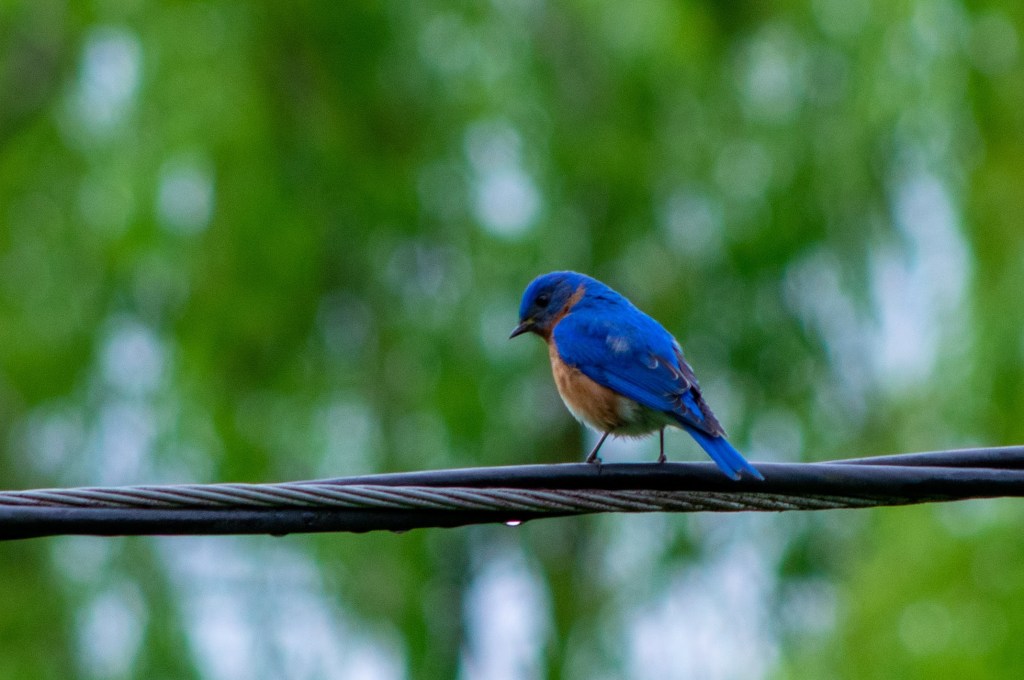
It’s been a little while since I’ve done one of Rebecca’s poetry challenges over at Fake Flamenco. July’s challenge is a good one! Here’s my entry:
How lucky
are the little birds
to fly –
unafraid,
perched high and serene,
unconfined.
If I could,
would I?
It remains to be seen.
But I can watch the world
from my own
perfect perch,
the nest I’ve made.
It’s not as big
as the sky,
but it’s
mine.
These are so much fun. 😊 If you’d like to participate, too, you’ve got until Sunday. Can’t wait to read what everyone submitted! It’s so cool to see all of the different perspectives on one theme.
 A Virginia Writer's Diary