Another year, another visit to Loudoun County’s (maybe) most haunted house! And this one might be my last, for reasons that I’ll talk about in an upcoming post. (Are you curious? I hope so!)
Anyway…
Here she is, in all her crumbling glory, as of October 2024:
They say nothing lasts forever, and this house certainly won’t. In the years that I’ve been visiting, I’ve watched the old girl deteriorate a little more each season.
And who knows if the house’s story will outlast it. I hope I’ve done my part, at least, to capture some of the mystery. It will never be anyone’s home again, but perhaps it can be someone’s memory. Even if it’s only mine.
P.S. As I do every year, I’ll add this disclaimer: This house is on private property, and there are no trespassing signs posted, so please don’t go poking around where you’re not welcome. It’s easy enough to take a picture from the road.
In what is becoming one of my favorite traditions for the spooky season, I stopped by the (maybe) most haunted house in Loudoun County again this year.
It’s little more than a ruin now, and has been for some time. I don’t think it’s been inhabited since the 1980s, possibly before, and it’s fascinating and sad to watch it crumble. You can see signs that it was once a beloved, well-kept home – the delicate dental molding at the front, what was once a fireplace on the second floor, remnants of bright white paint on the exterior bricks.
It’s certainly not a home anymore. But whether it’s empty? Well, who can say for sure?
P.S. As I did last year and the years before, I’ll add this disclaimer: This house is on private property, and there are no trespassing signs posted, so please don’t go poking around where you’re not welcome. It’s easy enough to take a picture from the road.
*And one more quick note: October’s short story will be posted one day late, on November 1st. I think it’s going to be a good one, so check back if you’re interested!*
Halloween and Christmas are my two favorite holidays, and I’d have a really hard time choosing between them. But there is one thing that I love that’s definitely more Halloween, and that’s a good ghost story.
(As you can imagine, A Christmas Carol is an absolute forever favorite. Christmas and ghosts? Yes, please!)
But over the last few weeks, as I’ve been sitting a lot, thinking about writing without actually writing much, I’ve been pondering: What makes a good ghost story? What elements come together to make something truly spooky? Or sad. Or happy. Not every ghost story has to be scary. Right?
Or should it?
When I think about my favorite ghost stories, there isn’t really anything consistent among them. Some are scary. Some are psychological. Some are funny.
I love BBC’s Ghosts, which is funny and heartwarming and about as far from creepy or spooky as you can get. I was really struck by the quiet, tense storytelling of I Am the Pretty Thing That Lives in the House. Netflix’s The Haunting of Hill House is sort of a revelation for psychological hauntings – the things that haunt us not because they’re real ghosts, but because they’re our ghosts. The Graveyard Book by Neil Gaiman is sweet and sad. Jonathan Stroud’s Lockwood and Co. series (the books, but the show on Netflix, as well) is such an interesting exercise in building an alternate world that feels close to our own, but is one we definitely wouldn’t want to live in. And certainly some of the old stories, like The Turn of the Screw and The Tell-Tale Heart, they stick with me. That building sense of dread, there’s really nothing else like it.
All of that to say, there are so many components, I think, that can make a really good ghost story. And some that can make an otherwise great story feel hokey and silly. Jump scares are fun, but they need to be used sparingly for maximum impact. There’s more to fear in what you don’t see, what you imagine and build up in your head, than in what you do see.
I’m rambling, I know. But I’m curious. What are your favorite ghost stories? What draws you in, or pushes you away? How do you like to see ghost stories end? Do you like to be scared in the first place?
I do, within the secure confines of my comfy chair and cozy living room. And that’s the power of stories, isn’t it? To be scared – or sad, or angry, or worried – but ultimately safe.
There’s something sort of sad and beautiful about watching this house crumble. Sad, because it’s very old and doubtless full of stories, even if it isn’t full of ghosts. And as it deteriorates, a little more every day, it takes those stories with it. Beautiful, because nature has a way of reclaiming land and forging on, regardless of what humans do.
I don’t know what this house will look like next year. But I’ll be there, regardless, to find out.
P.S. As I did last year and the year before, I’ll add this disclaimer: This house is on private property, and there are no trespassing signs posted, so please don’t go poking around where you’re not welcome. It’s easy enough to take a picture from the road.
Though you may bury us, we rise. From ashes and mud, blood and bone, we remake ourselves from the sand and the stone that covered us, smothered us. Though we are gone, our spirits are strong. We climb, we reach our withered fingers into the sky, and sing the song no man can silence. Though few may hear, we will sing for those listening.
The last dress rehearsal did not go well. In fact, it went very, very poorly.
“You know what they say,” Mitch told me.
“You know I don’t,” I answered.
Why would I? Years of restaurant experience had led me down a dead-end path and straight into the wings of the Old River Theatre. Desperate times, Mitch had said. And anyway, I’d only be the assistant to the Stage Manager. He thought it was funny that I was going backwards.
“You’re supposed to wait tables while you try to make it,” he’d said. “You’re working the other way around.”
Now, as we closed up the final dress for the season opener, he clapped me on the back and said, “I forget sometimes. Feels like you’ve been here forever.”
“Is that a compliment, boss?”
“Frank’s been here forever, too, man.” And he pointed up towards the catwalk.
Frank managed lights, sound, and all other things technical and sundry. And he drank himself into a stupor every night. He was probably at it now, somewhere up there, taking swigs from his hip flask and tapping his foot to music only he could hear.
I rolled my eyes. “He’s a liability, Mitch,” I said. “Anyway, tell me, what do they say?”
“Bad dress, good opening. Should be a great show.”
I didn’t feel so confident.
“Don’t worry, kid,” he said. “We’re all professionals here.”
I raised an eyebrow.
“Even Frank,” he added. “Let’s finish out and go grab a beer.”
This year, Old River decided to open its fiftieth season with The Sound of Music. The playbill proudly proclaimed it “America’s favorite musical!” Could have fooled me. Ticket sales moved fast enough, but the cast and crew came in every day looking like they’d rather be anywhere else.
“Twenty fucking minutes of ‘Do, re, mi,’” the director said, one evening, after a particularly grueling dance rehearsal. “What do you even do with that?”
The production so far honestly seemed sort of cursed. We’d been hit with a volley of issues starting on day one. Bolts of fabric that never arrived to the costume shop, a music director who lost hearing in one ear halfway through, three von Trapp kids coming down with the flu on the same night. Just one thing after another, culminating in a last dress rehearsal from hell.
“Is all of this normal?” I asked Mitch as we started on our second beer at the dive bar down the street.
“I’ve seen a lot,” Mitch told me, “but this one does feel sort of different.”
“Different how?”
Mitch sat for a moment, and then took a deep gulp of the rest of his lager. “Every show has a few issues,” he said. “I had a lead actress a few years back who used to get laryngitis during every tech week. But this cast, I don’t know. Normally, it starts to feel like a family, you know?”
I nodded. I did not know, but I thought it might be nice to see, one day. Lots of restaurant owners say that about their staff. It’s never true.
“This one just feels off. Maybe it’s just me. I’ve never liked this show.”
I hummed an agreement.
“Next up is Midsummer, and I’m looking forward to that one. Shakespeare’s wild.”
“I think I read that one in school,” I said.
“Trust me, it’s better on stage. Fucking funny.”
I did trust Mitch. I didn’t know what to think, at first, walking into this new world. Actors are a weird bunch, but I’d enjoyed this job so far a lot more than my last three. And the hours suited me fine. Servers get used to late nights and slow mornings.
“Isn’t one of his plays cursed?”
“Shakespeare’s? Oh, yeah,” Mitch said, and laughed. “The Scottish play. Don’t let anyone hear you say the name, ever.”
“MacBeth?”
Mitch bobbed his head. “I think it’s silly,” he said, “but lots of people believe it. I should give you a rundown of all that shit.”
“All what shit?”
“The legends. The bad luck and shit.”
“I don’t believe in that stuff either,” I said. “But I also don’t want a reason to get fired.”
“We’ll talk about it tomorrow,” Mitch said. “After things calm down. For now, we ought to get going. It’s late.”
I looked at my watch. Just after 2:00, and with an early call tomorrow. I left some cash on the table and stood up.
“I think I left my coat in the green room,” I said. “Sorry about that.”
“No problem,” Mitch said. “I need to run back and grab my notebook anyway.”
We walked back at a pretty slow pace. The weather had just started to turn. The days still felt summery, but in the evenings, the temperature and the humidity dropped. It was a relief, after the summer heat, to finally feel a bit of fall.
“I bet September’s chilly this year,” I said.
We reached the stage door, and Mitch fumbled with the key.
“It always sticks,” he said, and shook his head. “It’s like the ghost doesn’t want us in there late at night.”
He pushed the door open and flipped the lights to the green room.
“The Old River’s haunted?”
“Every theatre has a ghost,” Mitch explained, a little like he was talking to a child. “That’s why we always leave a stage light on.”
We made our way into the left wing, where Mitch’s station was set up by a small podium.
“We do?”
“Geez, kid, I know you’ve seen me do it.”
I thought back and realized I had. I just hadn’t really thought about it before now.
“Or, at least, that’s what they say,” Mitch added. “Really, it’s for safety, but people love their ghost stories.”
“It’s not on right now,” I said. And sure enough, the stage was dark. The house was pitch black.
Mitch turned to check, and I think he actually gasped. We walked to center stage and I looked up.
“Maybe Frank turned it off,” I offered.
“Frank!” Mitch walked to the right wing, and called again. “Frank?”
“Or maybe he went home,” I said, quietly.
“Nah, he’s here somewhere. Go up and check the catwalk.”
“He’s not on the catwalk, boss,” I said. “He’s out in the auditorium. Er, house.” Now that my eyes had adjusted, I could clearly see someone out there, seated towards the middle, looking straight ahead. I pointed, “You can see him, right?”
Mitch shook his head. “Not Frank,” he said.
“What do you mean, not Frank?”
He didn’t answer.
“Who is it, then?”
Just then, the stage light flickered on. I looked out into the house again.
“He’s gone,” I said.
“Let’s go,” Mitch said. He turned on his heel and practically ran back to his station. He grabbed his notebook and stuffed it into his bag. “Come on,” he said.
We hurried toward the door. At the stairs to the catwalk, Frank met us, smelling like he’d swallowed a whole distillery’s worth of whiskey.
“You’re here late,” he wheezed. Poor Frank.
Mitch just nodded.
“Have you been up there this whole time?” I couldn’t help asking.
“Yeah,” Frank answered. “Just came down when I heard you on stage. Ghost light was out. Got it fixed.”
Mitch didn’t say a word, and the three of us walked out together as if nothing strange had happened at all.
************
Just as Mitch predicted, opening night went off without a hitch. The cast hit every beat, nailed every song, and the orchestra played like they’d practiced together for years. For all I knew, some of them probably had. Even the kids were perfect. It was exhilarating, being part of this kind of magic.
Mitch took us out for a drink after the show. “I’m buying,” he said. “You did a good job tonight.”
“Thanks,” I told him.
“So, are you hooked?”
I thought about it. I’d never been part of anything quite like this before. And so I answered, “I think I am.”
“Okay, then,” Mitch said. “Then there are definitely a few things you need to know, if you’re sticking around.”
“Okay,” I said.
“The first thing is, you never look directly at Mr. Holly.”
“Mr. who?”
“That’s who you saw last night,” he said. “You know I said every theatre has a ghost? Well, he belongs to the Old River.”
“You’re kidding,” I said. I put my beer down.
“I’d never seen him before last night,” Mitch told me. His flat tone indicated to me that he was, in fact, completely serious. “And I’d like to never see him again.”
“Okay,” I said. “Okay.” I thought about it again, and nodded once. “Okay. Well, tell me the rest,” I said.
And Mitch smiled. “You’re one of the good ones, kid.”
************
Thank you for reading! This is the eighth of twelve stories I’ll write as part of my 2022 Short Story Challenge. Twelve months, twelve stories, and the theme this year is: Folklore
Here are the first six, if you’d like to read them:
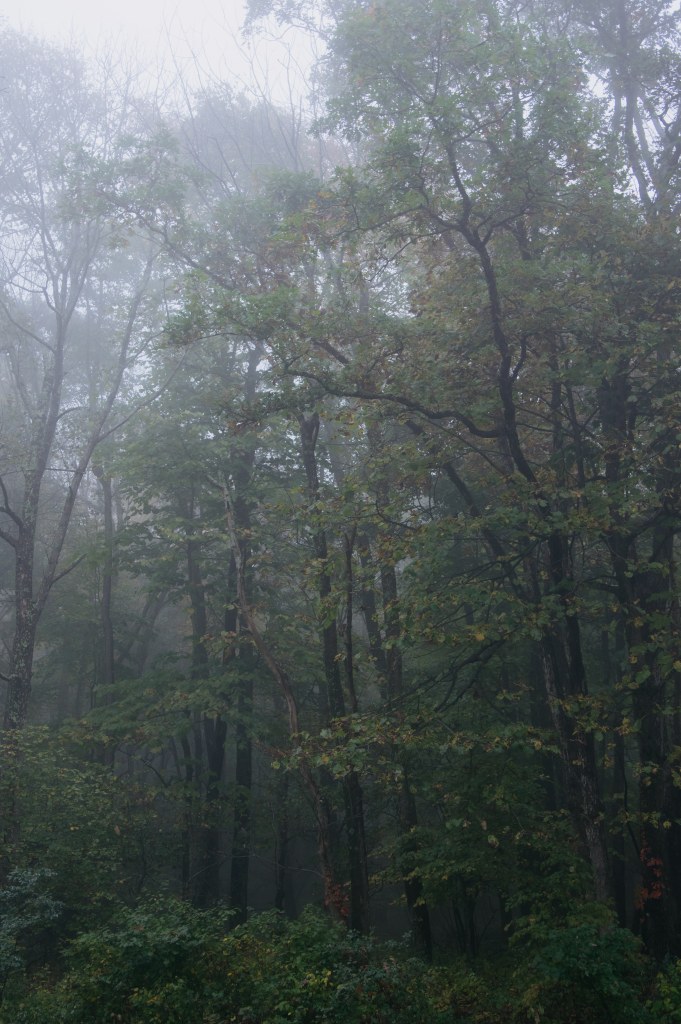
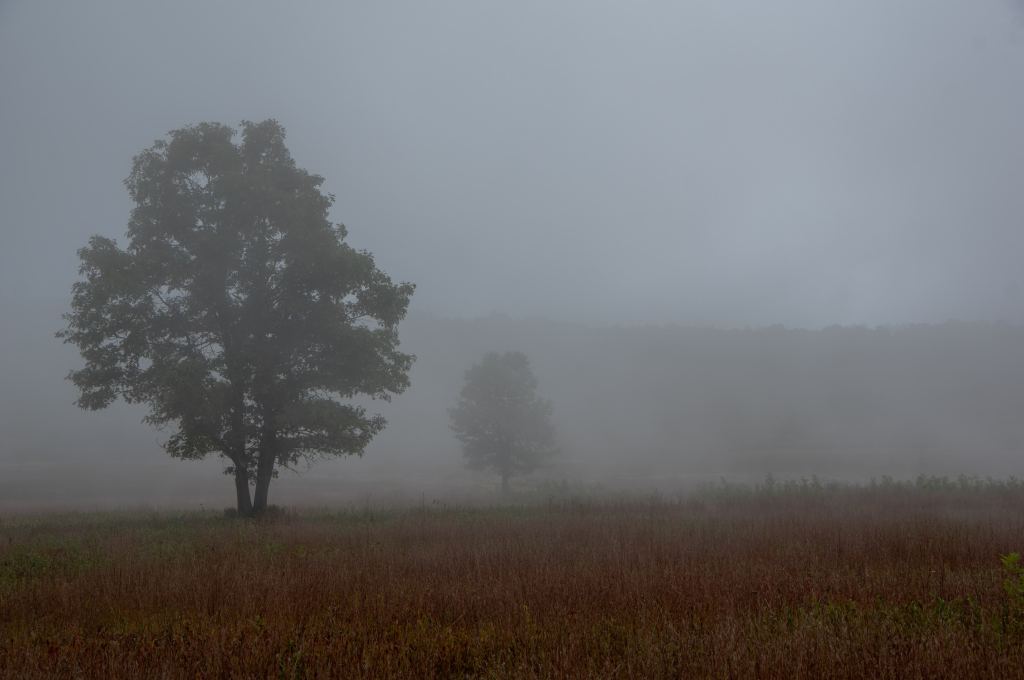
We’ll never know who did it. Who cast the spell and brought the fog. It rolled in as we slept, before the dawn, gray and viscous, a blanket of cool and damp. It slithered over the grass and in the trees, and curled itself into every little nook, cranny, and corner.
Life was quiet on the Mountain. That’s why we came. That’s why we built our homes and planted our gardens and settled here. High above the rest of the world, away from the noise and the hurry, we could live in peace, with no one but birds and bears and deer to judge us, and nothing but trees and stars and each other for company. This we wanted – this easy, quiet, slow turning of the days, this peaceful time together, this chance to build something better than we’d had before. We were all grateful for this place and this peace, and most of all for Mary, who’d made it all possible.
Mary had money, more money than she needed, she said. But more than that, she had love. Love to give to all of us, more than we’d ever had. She embraced us, guided us, and made for us a home in the sky.
“Come to the Mountain with me,” she’d pleaded, “come and live there together and we’ll show the world that it never should have given up on us.”
And we’d come. How quickly we’d packed our bags – only one for each of us – and said goodbye.
“We’ll build something they could never even imagine, and we’ll do it together,” Mary had said. “I deserve happiness. You deserve it, we all deserve it, and we’ll create it there, together. Come with me.”
And then she’d hugged each of us, touched her white, slender hand to each of our hearts, alabaster against the grime of a world gone wrong inside us, and she’d kissed our cheeks with her cool, red lips. And to every one of us, she’d said, “I am yours, and you are mine, and we belong to each other. Do you love me?”
And we’d answered, all of us, barely above a whisper, “I love you, Mary.”
“I love you, too,” she’d said.
And just like that, Mary became Mother, and all of us Brothers and Sisters, her Children. She’d protect us, feed us, clothe us, love us. We truly did belong to each other, and not even an army couldn’t break us apart.
In the beginning, in those earliest days on the Mountain, we prayed and we worked and we sang. And we ate together at every meal, stretched out on threadbare blankets across the high Green Valley meadow, or squeezed into the Peoples’ Hall if the weather was cold or wet. We ate the food we grew, and Mary, always somewhere in the middle of all of us, reminded us to be grateful, and to show appreciation.
“We work together as one, and what feeds one feeds all. We live for each other, and to each other we give life.”
And on Thursday evenings, tucked together into the chapel at the Pinnacle, the top of our little village, Mary told us stories and asked us to share our own. And when those stories were sad, or angry, then we’d join hands and lift our voices to cast out that dangerous energy.
“Make no mistake, my Children,” Mary would tell us, “there is evil in this world, and those who think it and speak it, they manifest it. They cast it, they give it form.”
And here, she would pause, breathe deep, and we could feel her fear and worry. And then she would smile, gentle and wide.
“But we are new,” she’d say, “and we are safe here together. We are new every day, every moment, that we choose to live in love and not in fear.”
Mary spoke often of the Darkness. Her greatest agony, she said, was knowing that it was always close by, in all of our hearts, and our greatest task was keeping it at bay.
“We all harbor Darkness,” she’d warn us. “Even within myself, I feel it. But we must never let it take control of us, and we must never give in to it. My mother always told me, and I tell you now, that one bad apple spoils the bunch. What’s done by one is done by all, but we can work together to harbor the Light. We must always love and trust each other. And my Children, sometimes trust must be earned, and love must be cruel.”
We all knew what she meant. We all knew the Punishments for evil thoughts and dark impulses. Mary decided each case, and we knew she felt the pain of each judgment. A day spent facing the wall, or an evening without supper – these were for mild discretions, like laziness or a harsh tongue. A beating administered by the Offended, that was the cost of spreading lies. But for something truly evil, it was a night in the Cellar, in the cold, dark ground with the worms and snakes, and with no light, food, or water. And if the offense was bad enough, a night could become a week, or more.
Mary would cry as she led us there to witness a Punishment. And she would tell us, as she embraced the Offender, “You are Punished now because you are loved. May you learn this lesson, Child, and may your return to the Light be your reward.”
Always, one of us was missing. But we knew the stakes. We knew that any hatred or sinfulness within one of us could spell the end for all.
Some days, Mary would leave us, and spend time on her own.
“I need my Silence,” she’d say, “so I can hear what can’t be heard. I will bring it to you, and share it with you. My mind is your mind.”
She kept her room in the back of the Pinnacle, and we knew never to intrude upon that space. And so on the days when she rested and listened, we worked as normal, often harder, so she could see. We sewed and mended, we scrubbed, we cooked, we chopped wood for our fires and gathered flowers or leaves for our hearths, and we waited. And when she came back to us, she always noticed.
“My Children, I am proud.”
The greatest compliment.
Our lives were simple. And our love for each other was deep and unshakeable, and we lived for a long time in that comforting, warm certainty. And then, one day, we noticed a change in Mary.
It started at supper, on a cool autumn evening. As Mary led us through our Evening Prayer, her voice trembled.
“My Children,” she began, “my heart is heavy today, and my bones are tired. I feel a change coming, and I fear it will be difficult for us.”
She paused, and we waited, each of us holding our breath and clenching our fists.
“I ask that you trust me, as I trust you,” she continued. “I do not know what our future holds, but I will guide you, and I will show you the path, as I always have.”
She touched one hand to her chest, and raised her mug of tea in the other. “Our Family,” she said.
“Our Family,” we repeated.
In the days that followed, Mary spent more time alone, and when she did join us, her gaze was distant, her blue eyes clouded, and she spoke barely a word. She didn’t join us in preparing our meals, or in our daily chores. And when she did speak, her voice was flat and empty.
“The time is coming,” she would say. “A change is coming. It is one we all need.”
And then, one morning, Mary didn’t come to the Peoples’ Hall for breakfast. She didn’t come the next morning, or the one after that, and we started to worry.
And on the morning of the fourth day, we found a note, and beside the note, a bottle of amber liquid, both placed in the center of the main dining table.
My children, the note read, in Mary’s delicate, spiraling script, the day is today. All Mothers must let their children fly, and today, you must spread your wings. It is the pain all Mothers must endure. I have taught you what I know, and you have made my life full and beautiful. We have belonged to each other, and we will belong to each other always. But today, I must allow you to grow beyond me, and you must allow yourselves to take these next steps into the Light. I must leave you, but my heart will remain on the Mountain, because it is there within each of you.
And here, she’d written instructions. Terrible instructions.
I will meet you on the Path, my Children, though I will walk it with you no longer. Trust that when the time is right, we will be together again.
There was some argument about what to do next. Some of us, the weak and the frightened, couldn’t bear to follow Mary’s guidance, and they left and made their way down the mountain. But most of us, we stayed. And we gathered cups from the kitchen, and we poured for each other from the bottle and drank deeply. And we fell asleep, just as Mary said we would, and when we awoke, there was the fog.
Now we are here alone. And the fog will not relent, and we will never know who brought it to us – doubtless one of the few who left us spoke it into being and made it real. The Light is hard to see, but we will not give up.
And Mary will come to us, we know, when the time is right, just as she said. Perhaps she’ll emerge from the tree line in the Green Valley, or she’ll make her way down from the Pinnacle, weaving through the dark trees in her bright white dress.
But we know she’ll come. Our Mother would never abandon us. In this, we have decided, she is trying to teach us. Patience, maybe, or trust. We trust her. And so we will wait here, for as long as we must. We will wait for her, in this fog, on this mountain, our home.
*************
Thank you for reading! This is the tenth of twelve stories I’ll write as part of my 2021 Short Story Challenge. Twelve months, twelve stories, and the theme this year is: Home.
Here are the first nine stories, if you’d like to read them:
I wrote about it last year because I’d been reading a book of ghost stories my friend gave me , and I connected some dots and came to conclusion that the house in a story I’d read that day was very likely the same house.
Can I be certain? Well, no, but I’d like to think I’m right, because it’s a pretty cool connection. See, this house is just a few minutes away on the outskirts of our village, and Graham and I drive by it frequently. Of all the gin joints, right?
I’ve always been a fan of both ghost stories and old houses. I love walking into a space knowing that it has a history, that others have come and gone and loved it and built their lives there before me. And honestly, I think it’s just a fundamentally, very human thing to love ghost stories. Something in our primal makeup, in our DNA and our bones and the very oldest part of our brains tells us to be afraid of things that go bump in the night, and to ponder what happens to us when we die. I grew up in a town full of ghosts and legends, and I live in an area rife with them now, too. And this house is just one small piece of that larger puzzle.
Or, it was. Which is to say, it still is, but for how long is anyone’s guess. It was a ruin last year. It’s in worse shape now.
Graham stopped by yesterday and snapped this picture. Sad, isn’t it? Soon enough, the house will be gone, and the stories will be all that’s left. Then one day, they’ll be forgotten, too. But for now, the house is still here, crumbling away on the roadside, taking its secrets with it.
P.S. As I did last year, I’ll add this disclaimer: This house is on private property, and there are no trespassing signs posted, so please don’t go poking around where you’re not welcome. It’s easy enough to take a picture from the road.
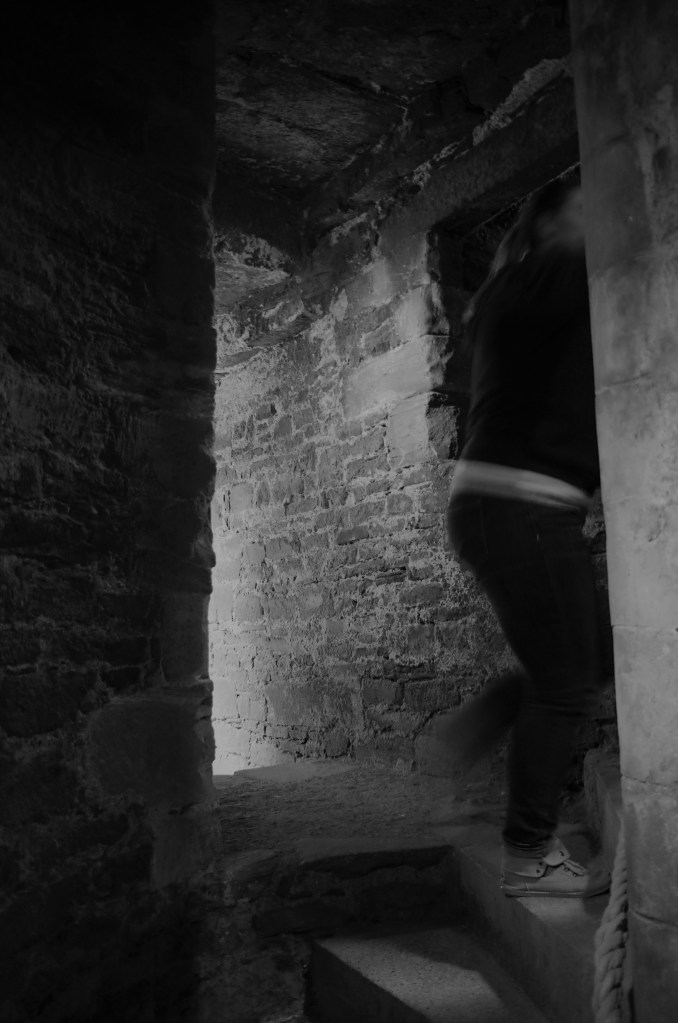
I am only a flash in the corner of your eye, nothing but a shadow, or a trick of the light on the stair, there and gone. You can try to catch me in a photo, or to capture the sound of my voice. Many have, and most leave disappointed. Are you scared? You should be, you know. I’m not for everyone.
I see Jesse’s face in my dreams at night, still and pale, and young. She’s always young, even after all these years. I can’t call it a nightmare. She doesn’t scare me. She doesn’t move and she doesn’t talk. Her eyes are closed, heavy lids and dark lashes, her mouth a thin line. It’s not the dead we should be afraid of.
Jesse was my cousin. She was all quiet moments and pretty things. When we were up to our knees in muddy creek water, hands digging in the muck for crawdads and river rocks, she’d be up on the bank, making flower crowns woven so tight and so clean, every flower perfect, you’d think they were plastic. I wore torn denim overalls and dirty sneakers. Jesse wore white linen, soft cotton in pastel shades. She loved checkers and cherry colas, always in a tall glass with big ice cubes. Her blonde hair lay braided and neat, trimmed bangs framing her freckled forehead. She offered to braid my hair once, and to help me comb out the tangles. I told her it wouldn’t be worth the time.
She was three or four years younger than me. If she’d grown up, we’d be in the same spot – mothers and wives and almost old women, both of us. But when I was eleven, nearly a grown-up, she was a baby. I often wonder what kind of teenager she would have been, what kind of mother, what kind of person. I try not to think of her often, but it’s gotten harder now. See, place is a powerful thing, and this is Jesse’s house.
I’ll tell you a story. Over the years, the details have gotten fuzzy, and most of the people who remembered it well are gone now. I feel like someone should tell it and remember it, though, even if it’s done poorly, because I don’t know if there are even any pictures of Jesse left.
On her last day, we’d gone out into the woods. The weather wouldn’t let up. It hadn’t rained for days, but the dewy air stuck to our arms and faces. The heat wouldn’t break, even at night. Nothing to do in that kind of weather but live with it. So the neighbor kids had strung up a rope swing into one of the old oak trees in the clearing near the river, under its shade and out of the brightest sunlight.
There were five of us that day. Me, my brother, Bill and Audrey from down the road, and Jesse. We headed out after lunch time, our faces and hands stained pink and sticky from the watermelon we’d snuck out of the refrigerator. Except for Jesse’s. She’d decided to save her watermelon for later. Our plan was to cool off in the river, and then to spend some time on the swing, maybe see who could get the highest and then jump the farthest.
“Audrey’s scared of heights,” Bill said.
“I am not,” Audrey yelled, and crossed her arms and stomped on ahead.
“She is so,” Bill told me. “She won’t even climb up the ladder in the barn.”
I wasn’t really listening or not listening. Bill and Audrey argued a lot, and it played in my head like the music on a radio station. Constant background noise. Jesse trailed along behind us, picking the dandelions from along the path and blowing their fluff out around her. She giggled, and I smiled. I turned around at one point and threaded a stem behind her ear.
“It’s itchy,” she said, but she smiled too.
The river was low and warm when we got there. It almost stood still.
“There are mosquitoes everywhere,” I said. “Let’s just go back.”
But the group decided we’d come all this way and we should at least get some time in on the rope swing. So we did, and took turns.
“It’s too high,” Jesse told me. “I don’t want to.”
“That’s okay,” I said. “Next year.”
We headed back at about 3:00, a little more dirty and tired for the time, but pretty happy and mostly distracted from the still sweltering summer day. Jesse trailed along behind again, clean as a whistle, but with a wrinkle in her brow and downcast eyes.
“What’s wrong,” I asked.
“Nothing,” she said.
“Nah,” I said. “I can tell it’s something.”
“You’ll laugh at me.”
“I would never!”
Now, this wasn’t strictly true. I’d laughed at Jesse plenty. She was an odd kid. But I could tell something was eating at her, and I wanted her to tell me. I especially wanted her to tell me before she told her mom, in case what was troubling her meant trouble for us.
So I added, “You can tell me, promise.”
And she said, “I want to go back and play on the swing.”
“I thought you were scared,” I said.
“I was, but that was dumb. Now I can’t even try.”
“We’ll go back tomorrow,” I told her. “We’ll go just us.”
She grinned a little then, and I thought it was fine. I held her hand most of the way home, and only let it go when Audrey tripped over a rock in the road and needed help to get up. I don’t know how Jesse slipped away from us. But she did. And when we all walked through the kitchen door, Jesse wasn’t with us. I’ve never felt so terrible for anything in my life as I still feel for letting her disappear like that.
“Jesse still outside?” My aunt sat at the table with my mother, shelling sweet peas.
“She was right behind us,” I said. And I thought it was true.
But by 5:00, Jesse still wasn’t back. And people started to worry, and then, before dinner, they went out to look.
They found her in the swing, all tangled up in the rope. She looked like she’d been there a long time. I’ll spare you the details. I don’t like to think of them.
They brought her into our back room, and laid her out on the little twin bed. If you didn’t know, you’d have thought she was sleeping. She looked peaceful there in the dark. I hope she was.
Or, I suppose, I hope she is.
I don’t think she ever left.
Everyone else did, though, and now it’s just me and my husband in this old house. My brother left for the Army. Bill and Audrey moved away. My parents died, and Jesse’s mother, my aunt Margie, she could never come into the house again.
“She’s still in there,” she’d say. “I know she’s still in there.”
I thought she was just sad. Sad and a little crazy. They say she went a little crazy after Jesse died. Now that I’ve had children, I don’t blame her. I’d go crazy, too. I’ve had a hard enough time knowing they’ve moved away to start families of their own. The house is too quiet without them.
Except when it’s not.
Every once in a while, I’ll hear a giggle. Sometimes a creak on the floor, or a rustle on the bed. Sometimes, I’ll hear a door open and close, slow and quiet. Jesse was always so quiet. And when that happens, I’ll say to my husband: “Jesse’s in the back room.”
Whether he believes me or not, he’s never said.
************
Thank you for reading! This is the seventh of twelve stories I’ll write as part of my 2021 Short Story Challenge. Twelve months, twelve stories, and the theme this year is: Home.
Here are the first five stories, if you’d like to read them:




 A Virginia Writer's Diary