*March is Women’s History Month, and tomorrow, March 8th, is International Women’s Day. I wrote a poem around this time last year – you can find it here – and so it felt right to post something this year, too. I hope you like it, and please be sure to take some time this month (especially tomorrow) to appreciate all of the amazing women in your life, past and present. I have many. They have my heart.*
************
Eve
A story we’ve heard: The first of us all (to fall) – help-meet and wife, made and prized, then punished, removed and reviled. The woman who became a warning.
And history became both judge and jury, gave us no choice, no voice. The story became ours, but it never belonged to us. And before, and now, down in our bones we know it.
We know: It is human to fall and rise again, to seek, to learn, to live in curiosity. And so, can we reclaim her, weave her story anew and see her, this mother of mothers?
Blood of our blood – can we finally love (not blame) her?
Just a fun, silly something for this sunny Friday. Enjoy!
Good morning from the Land of Almost There, where we celebrate a week’s close with friends and beer. Tonight, we’ll pretend the work’s at an end for two days’ time and change, and hang our hopes on brighter days when we’ll be free to do as we please. This is your invite. Don’t be late!
“She must be lonely,” I say, and inch closer to my mother, burrowing into her shoulder. “She must be bored, too.”
“She’s not lonely, sweetheart,” says my mother. She pulls the blanket tighter around us, and we huddle together, gazing up at the night sky.
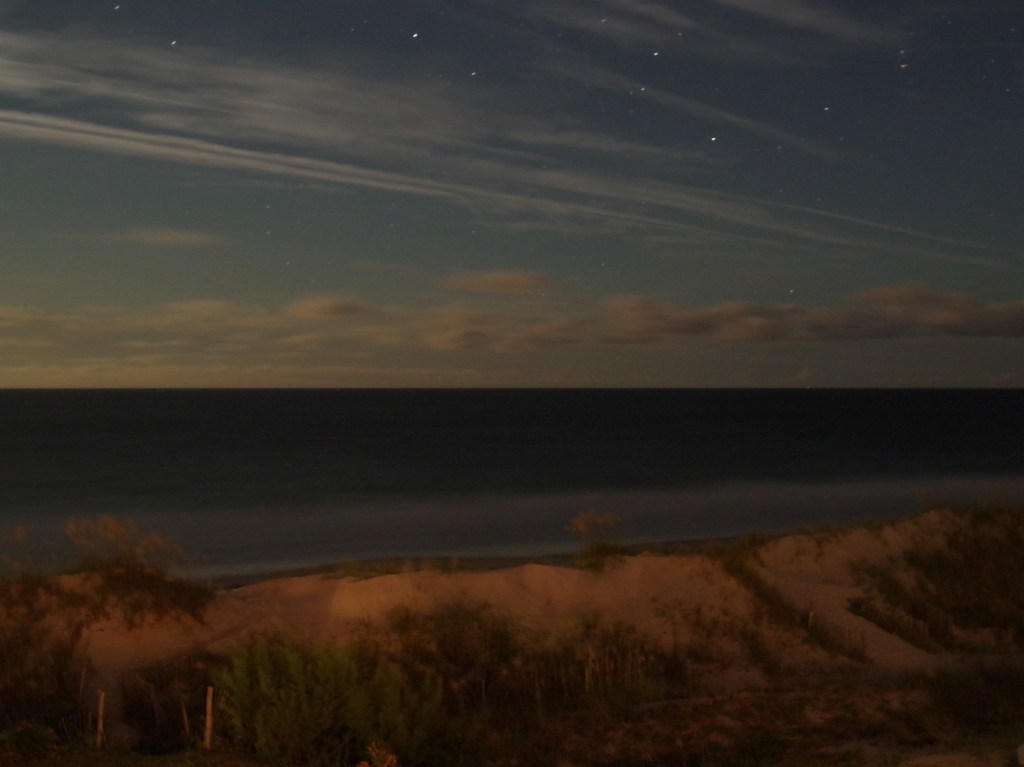
This is our tradition, every February, to greet the end of winter, and to say goodbye to the lady in the stars. Tonight, we sit together on a blanket in the sand, listening to the rhythm of the waves and the cold wind blowing through the dune grass.
“I’d be lonely,” I say. “And I bet she’s tired of the quiet, too.”
“She’s very old,” my mother tells me, “and very wise. She sees all of us, and our joys bring her joy. She’s not lonely, with the whole world and the moon and stars to keep her company.”
My family has lived on this island for as long as anyone can remember. We’re as tough as the sea and as sturdy as the land, my mother says. Together here, we’ve made it through ferocious storms and sweltering summers. We’ve learned how to live on the outskirts, on the edge of the country, and all that time, we’ve passed down the story of the lady and her home in the winter sky. And tomorrow, I’ll leave her, and my family, and this island, forever.
“James is a good man,” my mother says, “and he’ll take care of you. You’ll make lots of friends. You’ll have pretty babies, and you’ll be happy.”
She always could read my mind.
“You can come to visit,” she says. “A boat ride across the bay isn’t a trip across the ocean.”
“I know,” I say. And I do, but right now, the bay feels a lot like an endless, angry ocean, dangerous and impossible to cross.
“The lady was scared, once, too,” my mother reminds me. “She had to leave her home and family.”
“The stars needed a guardian,” I answer back, parroting the story I’ve known my whole life. “And she was chosen among all her people to be that guardian, and she accepted, because she was brave and smart, but also because she was kind.”
“Most importantly because she was kind,” my mother clarifies.
“I’m not kind,” I say. I sit up and fidget with my bootlaces. “And I’m not brave, either.”
“You’ve never been afraid of the waves,” says my mother.
“I can swim.”
“And you’ve always taken care of the gulls,” she says.
“I can’t stand to see them hungry.”
“Other people would call them a nuisance,” my mother tells me.
“I find other people to be a nuisance,” I say.
“You want to argue,” she says, “and I understand. The lady didn’t think she was brave or smart, or kind. She ran. You’re not planning on running?”
“No,” I say, and sigh. “No, I’m not going to run away. Where would I even go?”
“See!” my mother says with a laugh. “You’re very smart.”
I lie back and look up. The stars shine bright white, like diamonds on black satin.
I know what it’s like in the city, where the stars hide from the streetlights. I’ve read about it, and about the crowds and the noise.
“The lady tried to hide,” I say, continuing the story, “but the moon found her, and reminded her that imperfect things can still light the way in the dark.”
My life will look very different from my mother’s, and from what I envisioned when I was small. Back then, many families called our island home, and children ran on the beach, and lovers huddled together on the dunes, and old grandfathers sat at the pub to drink ale and tell stories. Most of them have gone now, and there certainly weren’t any men of marriageable age left for me to choose from when the time came. And so my father chose for me, a well-to-do man on the mainland, with a nice brick house and an old family. Like ours, but not like ours at all.
“The moon lit her way into the sky and walked with her to her new home,” my mother says. “And there, she cares for the stars and watches the world.”
“And they say,” I add, finishing the story, “that if the world should ever need her, strong and caring guardian that she is, she will leave the sky and walk the earth again.”
“There is always a path home,” my mother says. She reaches down and squeezes my hand. “But you might find you like your new one better, and that it gives you purpose and something to care for, just like the lady.”
“The lady isn’t real,” I whisper.
“She’s as real as you and me,” my mother says. “She’s as real as this island and the ocean, and as real as the moon and the stars.”
“She’s just a story.”
“And like I said before, you just want to argue.”
“I don’t,” I say. “I really don’t. I’m just pointing out the truth. The lady isn’t real. I’m leaving tomorrow. Everything’s going to change.”
I stand up, walk out to the water. I let it slide over my boots, and I can feel the cold through the leather. I’ve probably ruined this pair. I don’t care. I hear my mother behind me, her steady steps in the sand. She places a hand on my shoulder. I turn, and she sweeps a stray hair off my cheek. My cheek is damp, and I realize I’ve been crying. She does, too.
“My brave, smart, kind girl,” she tells me. “Your life will be just as beautiful and vibrant as you want it to be. That’s your choice to make.”
“And even the lady had a choice,” I say.
“Your father chose James,” my mother says, “because he is a good man. You can choose him, too.”
James has written me letters and sent me pictures. He’s told me all about the life we’ll lead together, and how excited he is to marry his island woman. We’ve exchanged books, and shared our favorite memories. I don’t love him yet, but I know I can.
“I do,” I tell her. “I have. But I wish I could have both, James and this island. His home and mine. Why do women always have to choose?”
“Because only women are strong enough to do it,” my mother says. “But don’t tell your father I said that.”
We smile together, and turn back towards the dunes. It’s time to go home, for the last time.
“Someday,” my mother says, “I hope you’ll tell your children about the lady. I hope you’ll tell them about this island and our life here.”
“I will,” I tell her, and I mean it with every fiber of my being, right down to my soul. “I will.”
************
Thank you for reading! This is the second of twelve stories I’ll write as part of my 2022 Short Story Challenge. Twelve months, twelve stories, and the theme this year is: Folklore
I don’t know if this is a thing that happens in other places, but here in Virginia, before we get on with actual spring, we usually have a first spring, or what some people call a “fool’s spring.” And, well, I think we’re there.
It’s beautiful and sunny and in the 60s (Fahrenheit) today, and will be tomorrow as well. But I don’t think winter’s quite ready to let us go, and it’s supposed to be cold and possible snowy on Sunday before warming up again next week. So, I guess we’ll see.
Virginia, y’all. She always keeps her people guessing.
Anyway, I wrote a poem about it, because it just felt like the right thing to do.
**********
Winter’s chill softens. The sun and air and wind turn gentle and warm and the ground begins to thaw. All around the sounds of new life – a world rife with breeze and birdsong – but first impressions can be wrong and beauty’s a fickle thing. Here in Virginia, it remains to be seen whether this is truly spring.
The challenge for February is to write a pareado with the theme of friendship. Well, I’d never written a pareado before, and y’all, it was a lot harder than I thought it would be! But friendship certainly has a place in my heart, what with the Better Friendships podcast that I co-host with one of my besties. So, even though it was difficult, I had to give it a try. The results?
A true friend is a guiding star who lights the way even from afar.
No one walks life’s path alone who has a friend in heart or home.
…Not my best work. But it was still super fun! And if you want to participate, the challenge is open until February 12th.
When my child asks why my hair is going gray, I will say: “Those are my stardust streaks.” I will tell her we’re all made of earth and star stuff, and one day, once again, that’s what we’ll be. And I’ll remind her that it’s not a tragedy to say goodbye, even though it’s sad for a time, because she can always find me in the night sky.
*I read Star Mother by Charlie N. Holmberg this morning. It clearly left me feeling inspired (see: this poem, above), and I’d highly recommend it if you’re looking for something to read this week.*
Darkened sky and sodden ground, drops, drips, and downpours – the sound: a rhythm of life on cold, hard earth. The winter rain reminds us, a damp drumbeat to tell the world that spring’s around the corner.
My grandmother always says stories don’t have to be real to be true.
We’re sitting at her table by the fire, eating midnight cookies and drinking hot chocolate.
She takes a sip and tells me, “Real and true, they’re not the same thing.”
“What do you mean, grandma?” I ask.
The fire crackles, and outside, I hear the wind. It moans like it feels sad. Snow started falling while we ate dinner, and it hasn’t stopped. It’s the perfect night for a story, and my grandmother tells the best.
“Do you know about the Winter Woman?” she asks.
I know all about the Winter Woman, and I say so.
“When I was little,” my grandmother says, “they would tell us, over and over, that the woods aren’t safe. Not safe for children, not safe at night, and especially not safe in winter, when the other wild things sleep.”
I know this part, so I add, “She never sleeps.”
“Exactly,” my grandmother says. “Don’t go into the woods. Be afraid of the woods, and most of all, be afraid of the Winter Woman.”
My grandmother lives in the oldest house in town, right on the edge of the woods.
“Have you ever seen her?”
“No,” she says. “But that doesn’t matter.”
I ask why.
“Stories have power,” my grandmother answers, “because we believe in them. They have the power we give them.”
“Where did the Winter Woman come from?”
“Somewhere far away, and old,” says my grandmother.
I ask what she’s even doing here, then.
“She followed us,” my grandmother says.
I ask who, exactly, she followed, and why, and where from.
“She’s been with us for a very long time,” my grandmother says, “and she’ll stay with us even after you and I are gone.”
“What does she want?”
My grandmother smiles, and picks up my empty plate. “I think it’s time you go to bed,” she tells me.
She does this every time, every story. She tells just enough, just enough that I want more.
“Tell me, please,” I say, drawing out the “please” for as long as I can. “You always stop at this part.”
“What would you want?” she asks me.
I have to think about it. “Maybe something warm to wear,” I say, “if I’m out in the cold all the time.”
“Is that all?”
“Well, if she’s from far away, and everything else in the woods is sleeping, and people don’t want to see her, then I bet she’s lonely,” I say.
My grandmother smiles again, and ushers me out of the room.
“You’re a sweet girl to think of that,” she tells me, as we make our way up the stairs.
“So, I’m right? She wants friends?”
“We all want friends,” my grandmother says.
She tucks me in and sits by the bed in an old rocking chair. It creaks as she rocks back and forth.
“Will you stay until I fall asleep?”
“Of course,” she says.
“Grandma,” I say, “is the Winter Woman bad?”
“Did I scare you?” she asks.
“No,” I say. “I’m not scared. No one actually believes in the Winter Woman anymore.”
“Is that so?”
I yawn. “Yeah,” I say, and yawn again.
“Then she probably is lonely,” my grandmother says. “Now, go to sleep.”
And lulled by the rhythm of the chair, and the howl of the winter wind, I do.
************
Thank you for reading! This is the first of twelve stories I’ll write as part of my 2022 Short Story Challenge. Twelve months, twelve stories, and the theme this year is: Folklore
I hope you join me in the challenge! I think it’s going to be a very good year for stories. But just reading is good, too, and I’m glad you’re here. 😊
The next story will be posted at the end of February.
…for a day when my brain is just fried. Good news – we found a food Gatsby will eat! Bad news – it smells absolutely, nose-numbingly terrible. What can you do? Drink coffee and write silly poetry, that’s what!
I think the universe should know that I would like to see some snow. Though I don’t mind a winter rain, I’d like some flakes to fall again. I love a warm and breezy day, but it’s a while ‘til June and May. So sometime between now and then, let’s get some winter on again and satisfy those folks rarest who love the cold and snow the best.
Little one, the time is now to sing your winter song. From your ice-covered perch, let it carry and fly – over snow-covered fields and windswept hills, deep into the meadows and valleys. Let the cold wind sweep it far and wide. Remind us all that beauty lives in frost and bloom alike.