Pink sky, white landscape
Sun rises on a bright day
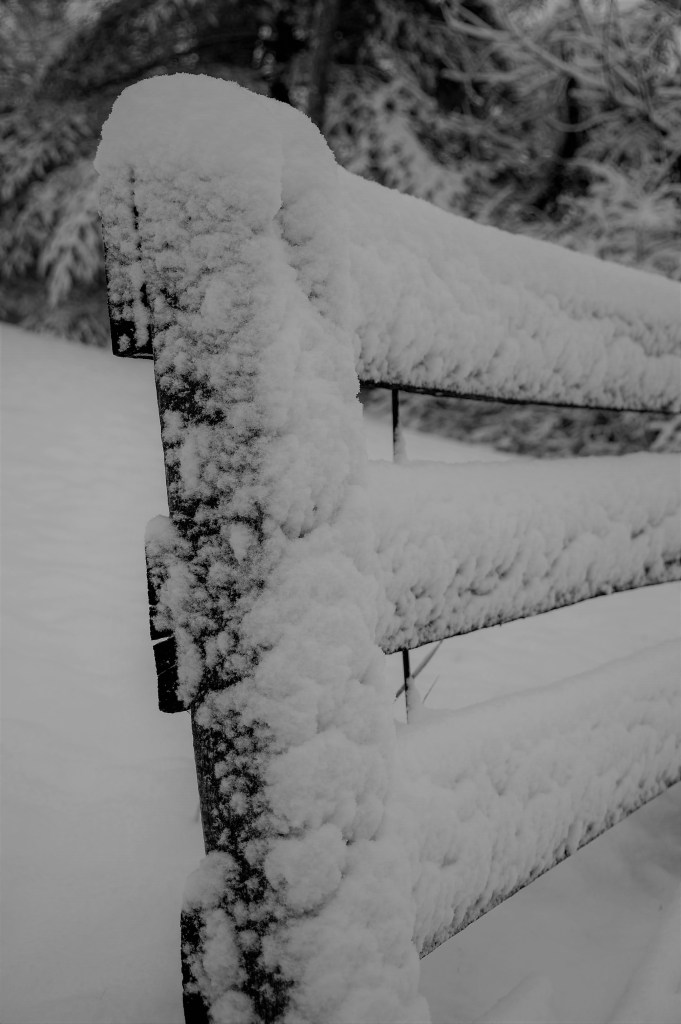
Winter greets the world

A storm overnight
Red berries in sparkling ice
Dangerous beauty

Cold winter moonlight
Stars on a velvet canvas
Silence in the fields

Pink sky, white landscape
Sun rises on a bright day
Winter greets the world
A storm overnight
Red berries in sparkling ice
Dangerous beauty
Cold winter moonlight
Stars on a velvet canvas
Silence in the fields
I know the beauty
of snow
is fleeting,
but it’s sad just the same
to watch it melt away
under a bright, warm
winter sun
and return to the earth
to one day fall again.
Until then,
I’ll wait.

Last year, I challenged myself to write twelve short stories – one story each month – around a central theme. A few other wonderful writers joined me, and it became a really fun and interesting creative project. So, of course, I’m doing it again.
The rules are the same: Write and post one story each month of 2022. Posted whenever you/I want to (for me, that’s usually the end of the month), and written around one theme. And the theme this year is:

Folklore.
I thought about several options, but this one wouldn’t let me go. How does a story become folklore? What are the necessary elements of a folk tale? What drives us to share folklore? How long does it last? Why does it last, and why, sometimes, does it fade away? Folk tales and folk traditions tie us to our ancestors. They connect us to our cultures, and to each other. Folklore is powerful, and I want to dig into it and see what I can learn along the way.
And if you want to join me, that would be wonderful! If you do, when you post your stories, you can use the tag “2022 Short Story Challenge” and mention this post. But just reading is good, too, and I’m glad you’re here for this journey. 😊
I think 2022 is going to be a wonderful year for stories!
************
If you haven’t read them, or if you want to revisit any of them, here are all of my stories from 2021. Some of them I really liked, some of them I didn’t, and some were certainly easier to write than others. But they were all worth writing, and they each taught me something (or, sometimes, a lot of somethings) about myself, the art of writing, and how to tell stories. I’ve put asterisks by my two favorites, though, because why not?
The Making of Annie’s Auld Lang Syne
Enjoy, and thank you so much for reading!
Through the gate and
into the cold winter world,
the New Year comes to greet the Old.
Not to replace or relive,
but revive –
tired hands,
tired hearts,
tired minds –
and bring new light
to the darkest days.
First thing’s first: I think this is a silly idea for an essay. I’m only writing it because Mrs. Vernon said I’d get a big fat zero if I didn’t. And so help me, Jordan Nunley, if you make those weird faces while I’m reading it out loud, I will throw my pencil at you every day for the rest of the year. It’s only December 11th, buddy.
I think this is a silly idea for an essay for two reasons. The first is that we’re twelve. We’re just going to do what our parents tell us to do on New Year’s Eve. The second is that there’s a stupid virus going around that’s keeping us from having too much fun anyway. Chances are, we’re all just going to sit at home and watch TV and eat snacks.
So, yeah, that’s “What I’m Doing on New Year’s Eve.”
But I’ve only written three paragraphs, haven’t I? And I’ve been told I need to write at least five to get a passing grade. So in the interest of my report card, here’s some more stuff that I’m making up to take up space and prove that I can make sentences and choose good vocabulary words.
My sister and I only like each other about half the time. My mom tells me this is very normal, and that we’ll be closer as we get older. Alice and I have our doubts.
On New Year’s Eve, sometime in the afternoon, Alice will walk into my room and say: “Are you really going to spend all night in here reading?”
She’s not supposed to come into my room without knocking, but she always does. So I’ll already be kind of annoyed, and I’ll say: “Yes.”
And then I’ll go back to looking at the stack of books I’ve got fanned out in front of me, because I’ll want to choose the optimal one to end the year with. A mystery? Or a romance? Or maybe a fantasy. But I’ll take the choice very seriously.
And she’ll look at me with that face that she makes when she thinks I’m being pedantic, and she’ll say: “You’re so boring, Annie.” And then she’ll laugh and walk away.
My sister laughs a lot. Mrs. Vernon knows, because Alice was in this class four years ago, and Mrs. Vernon sent a lot of notes home to my parents about how she’s “disruptive.” She’s always laughing or talking, and she’s always busy, and I sometimes think she’s exhausting. So it never bothers me when she laughs at me, because I laugh at her, too, but only in my head. And there’s no way on earth I’d want to spend my New Year’s Eve hanging out with her and her friends, doing…whatever it is that they do. I’d rather be boring.
Except I don’t really think I’m boring at all. I write a lot of stories, and I read a lot of books. I get to live in new worlds almost every day. That’s why I’ll make sure that the book I choose to read on New Year’s Eve is the perfect choice. Isn’t that cool? I can go anywhere in any world to end the year. Alice will probably just go to the park down the street and drink something gross. To me, that’s boring.
Anyway, I’ll choose a book and start to read, and in about an hour, I’ll probably get hungry. I used to keep a bag of chips in my bedside table for just this problem, but my mom started worrying that we’d get mice. So now, all the food stays in the kitchen. So I’ll walk downstairs and while I’m looking for just the right snack, my mom will be working on dinner, and she’ll warn me: “Don’t ruin your appetite.”
My mom’s a good cook, and I think she’s actually enjoyed having some extra time to learn new recipes. We made cookies together before Christmas, and they were probably my favorite cookies ever.
My dad will hear us over the sound of the TV, where he’ll probably be watching some show on Netflix for like the fifth time, and he’ll walk in, too, and he’ll say: “Where are you going tonight?” And he’ll wink, because he knows I’m not “going” anywhere.
I’ll say: “Decided to go back to Narnia, at least for a while. Might stop by Hogwarts later.”
And he’ll say: “Safe travels. Chess when you get back?”
My dad loves to play chess. He’s been teaching me for the last year or so, and I think I’m getting pretty good. I even win sometimes, though I’m never sure if it’s because I’ve figured it out, or because he lets me. Either way, it’s a thing we can do together, which is cool.
I’ll say: “Sure!”
And he’ll say something dumb, like: “The challenge is accepted. I must prepare for battle.”
My dad’s such a dork.
Last year, we decided to have a fire in the back yard and make S’mores, but this year I think we’ll probably plan to stay inside. It’s been a rainy winter so far, and I don’t think any of us wants to get our hopes up. Except Alice, anyway, because she’s crazy, but I already talked about that.
I’m already almost out of material, which is something my dad says when he’s trying to be funny. But I guess it’s a real thing, because it’s happening to me right now. Seriously, how do you write an essay about your plans when your plans are basically to do nothing?
Okay, so I’ll have chosen my book, and gotten some chips, and talked to my sister and my parents. Next, I’ll probably head back up and read for a while longer. I don’t know if I’ll actually choose The Chronicles of Narnia or one of the Harry Potter books, but I bet I’ll pick something adventurous. And it’ll probably be something I’ve read before, so it’s a sure thing that I’ll like it. And I guess I’ll eat dinner with my parents at some point, too. I’m not sure what my mom is planning to cook, but I am sure that whatever it is, it will be delicious.
At dinner, I bet we’ll talk about our New Year’s Resolutions. My parents both like to make New Year’s Resolutions, because they say you should always have goals. I haven’t decided yet, but I think my goals for next year are going to be to read twenty books, write ten stories, and start learning to play piano. I bet you’re surprised I want to learn piano, because I’ve never talked about it before, but I do. My mom’s been playing since she was little. If I do chess with my dad, it would be cool to also do piano with my mom.
After dinner, I’ll read for a bit more. And then at about 9:00, my dad will probably beat me at chess. And I bet that by then, he’ll have started a fire in the fireplace. Aside from chess, I think that’s his favorite thing. Alice will probably come home at about 10:00, because that’s her curfew, and we’ll just all sit there together until the ball drops.
My mom always cries a little right at midnight. She says they’re happy tears, and that she’s just really glad that we’re all together. I am, too, even though I can’t wait until Alice goes to college and gets out of my hair for a while.
And right after midnight, my mom will sit down at the piano and play “Auld Lang Syne,” and we’ll all sing. Which is the one thing Alice is good at. And then, we’ll hug and say goodnight, and I’ll get ready and go to bed. Or, to read. My parents always let me stay up late on New Year’s Eve to read.
And that’s it. That is probably “What I’m Doing on New Year’s Eve.” Unless an asteroid hits Earth or my parents win the lottery or something. Then I guess my plans might change.
See? I told you this was a silly idea for an essay. And don’t think I don’t see you, Jordan. I hope you like Number 2 pencils.
************
Thank you for reading! This is the last of the twelve stories I’ve written as part of my 2021 Short Story Challenge. Twelve months, twelve stories, and the theme this year was: Home.
Here are the first eleven stories, if you’d like to read them:
Stay tuned for an announcement regarding my 2022 Short Story Challenge. I’ve got some good ideas, and I hope you join me in writing some amazing stories. But just reading is good, too, and I’m glad you’re here. 😊
Happy New Year!
That Friday feeling:
at the end of the week,
either too tired to move
or ready to seek out the party.
Or, perhaps neither –
just looking to read a book
(or two)
(or three).
I admit,
it’s easy to be caught up
in the swing of the world
and the speed of the days,
to measure your progress
in emails and spreadsheets,
and forget to slow down
and just be.
So take it –
that Friday feeling, I mean –
and make it whatever you need.
Call it a night,
or read something good,
or do something nice,
or keep the lights on
until morning.
I promise,
while you’re resting
or dancing
or reading,
or taking a moment to breathe,
the planet will keep turning.
Another poetry challenge from Fake Flamenco! And another poetry form I’ve never tried: a flamenca. And y’all, this was most definitely challenging, but also really fun. I always love a chance to flex my writing muscles in a new way. So, enjoy! And if you want to participate, too, the deadline to post is Sunday, December 12th.
************
The old year turns to new
with a promise of light.
The darkest of days
reminds a weary earth
there’s peace in the night sky.

In last night’s pajamas,
throw together:
Ambition, with a dash
of anxiety.
Just a sprinkle of
focus,
and a pinch
of “I got this!”
Add a cup of coffee.
(Make that two, actually…)
Shake and mix well.
Serve with a side
of “Oh, hell,
I forgot about that…”
The Monday Special:
Order up!

The last of the year,
the shortest of days,
a high bright moon
in a new winter haze –
December descends,
the darkest of months,
in stoic shades
of white and gray.
But there’s beauty
in the spartan landscape
and comfort in the cold air:
a peaceful silence,
a slant of light,
a joy in rest
and in the hope of
fresh fallen snow,
a gift in the season of giving
and a spirit in knowing
the season is fleeting.
All things must
come to an end,
and in ending can
begin again.
Inside the house, heat radiated from the oven in the kitchen. The old cast iron woodstove in the basement burned warm and steady. Outside, a thick layer of fresh, white snow had started to blanket the brown grass and the empty trees. It didn’t often snow in the holler before December, but this year, flakes fell wet and heavy onto the newly cold earth. The gray, bright light of a winter morning peeked through the windows, and from his perch at the kitchen table, still in his pajamas, a little boy sat cradling a half-eaten bowl of grits in his hands.
“You go on along and brush your teeth as soon as you’re done,” said his mother. “I know you forgot last night.”
“I did not,” the boy answered.
“Oh, yes you did, James Henry Cumbow. Your teeth’ll fall out if you’re not careful.”
James Henry shuddered. He liked his teeth right where they were, thank you very much, even if he did sometimes forget to clean them. He watched his mother brush a raw turkey with melted butter, and then sprinkle on salt and pepper. His mouth watered.
“After you brush your teeth and comb your hair, you can walk on down the holler and watch.”
“I did so brush my teeth last night,” he insisted. And added, “I can really go watch this year?”
“I reckon you’re big enough,” his mother said.
He jumped off his chair and ran for the bathroom. He’d never brushed his teeth faster. From the kitchen, he heard his mother yell, “And wear your old gloves! I’m not buying more if you get your new ones dirty.”
James Henry dressed in a layer of long underwear, and then faded blue jeans and a red plaid flannel shirt. From the top of his closet, which he could just reach, he grabbed an old wool hat and last year’s gloves. He made his way back out to the kitchen, and hurdled toward the front door.
“Remember, now,” his mother said, “by the time y’all are done, dinner’ll be ready and on the table. Don’t be late. Tell your daddy, too, when you get down there.”
“I will, Mother,” he said, and grinned at her as he opened the door and stepped out into the cold.
James Henry had seen eleven Thanksgivings, this being the eleventh. Every year, before anyone else woke up, he’d watched his father walk down the holler and join his uncles and older cousins and all the neighbor boys in a tradition he’d at first found frightening, but now thought of as fascinating and necessary. Slaughtering the hog would feed all of them for months.
“And well, too,” his mother would say.
“It’s messy work,” his father warned him, every year. “And it’s hard.”
“You’re not old enough to help yet,” his mother told him. “And anyway, it’ll scare you.”
He was scared, a little, as he made his way through the falling snow down toward the barn and the smokehouse.

He was scared, and his hands trembled in their threadbare gloves. But he was excited, too, and he could feel the electric zing of it all the way down to his fingertips. This year, he’d join the ranks of his elders, and he wouldn’t be just a kid anymore.
He spotted his father first, standing outside of the hog’s pen with his Uncle Virgil and with Larry, an older boy from up the hill. Beside them, there were metal buckets full of steaming water, and a table with knives and gloves.
“Hiya, James Henry,” Larry said.
James Henry elbowed his way into the circle to his father’s side, and said back, “Hey, Larry.”
“Isn’t he a little young to be down here?”
Larry hadn’t addressed that to James Henry, but to his father, who looked down and said, “Your mama let you come down here?”
“Yes, sir,” James Henry answered.
“She tell you you’re ready?”
“Yes, sir,” James Henry answered again.
“Then you can stay,” his father said.
“Yes, sir,” James Henry said, and smiled big and wide at Larry, who’d started to look down at the ground.
“Well, that’s your choice, Porter,” his Uncle Virgil said to his father, “but I wouldn’t let my boy down here quite yet.”
James Henry crossed his arms and glared right at Virgil. “I’m old enough,” he said. “And quit talking about me like I ain’t here.”
Virgil just laughed.
James Henry didn’t much care. Let him laugh at me, he thought. I’m still here. And then he felt a hand on his shoulder, and looked up to see his father smiling down at him.
“You’re old enough,” Porter said, “and you can stay down here as long as you want to.”
With that, Porter walked toward the barn, and James Henry followed him.
“Daddy,” he asked, “how old were you your first time?”
“I reckon I was about nine,” Porter replied. “Maybe younger. Times was different back then. Little ones had to grow up fast.”
“How about Mother?”
“Your mama didn’t grow up in the holler,” Porter said.
“Where’d she grow up?”
“Philadelphia,” Porter said, “and then she moved down here for me, after the war.”
“What did she do before then?”
“You’ll have to ask her,” Porter answered, “because I ain’t got time to answer all your questions just now.”
James Henry was quiet.
“You ain’t done anything wrong, James Henry,” Porter added. “We just have to get to work if we want to be done by dinner.”
“Oh,” James Henry said. “I see. Can I help?”
“You’re just watching this year. But you can stand right over there while I get things ready.”
James Henry nodded, and wandered over into a dark corner of the barn. He watched for a while, as his father gathered up some extra knives and a couple of saws, but Porter always worked in silence.
“Daddy?”
“Yeah?” Porter answered, but didn’t turn around.
“Can I go outside for a while? It’s not started yet, right? I won’t miss anything?”
“As long as you’re at the pig pen in about ten minutes, you won’t miss nothing.”
James Henry said, “I won’t go too far,” and then jogged out of the barn and towards the smokehouse. He took a moment to stop and scratch one of the barn cats on the head, and then kept on moving, over to the hog’s pen. Larry and Virgil weren’t there anymore, and so he got to take a good, long look at the hog.
He’d seen hogs before. They were fat and muddy, and didn’t move much, from what he could tell. But this hog – this one was special, because it was chosen for the slaughter, and it would feed everyone, and he’d never gotten to see one of those up close on the day before.
“I bet you’re scared,” he told the hog. “Or maybe you don’t know what’s coming.”
The hog sat in silence.
“I’m not scared,” he said. “I’m big enough to not be scared.”
Silence from the hog.
“I reckon you are, too,” James Henry added.
He reached out a hand to pat the hog’s head, but stopped when he heard footsteps behind him.
“It ain’t a pet, James Henry,” Larry said. “Stop fussing over it.”
Behind Larry were Porter and Uncle Virgil, along with a few other men and older boys. Robert, who helped with the stalls, and Tilson, who was only two grades above James Henry. And his Uncle June, too, carrying a rifle.
James Henry shivered. He knew what came next.
Porter walked up behind him and said, “You don’t have to watch if you don’t want to.”
James Henry stood right where he was, and kept his eyes open.
“Suit yourself,” Porter said.
When the shot came, it was quick.
Porter put a hand on James Henry’s head, rubbed at the top of his wool hat and said, “Why don’t you go on back to the house now?”
James Henry watched what was going on around him. The snow fell, and the wind picked up. The men moved fast, methodical. James Henry thought they looked a lot like the bands he saw sometimes on TV, like each man had his own part and his own instrument. It looked a lot like work. Like when mama cut up a chicken for dinner, or when daddy brought home a buck to clean.
James Henry stayed, and his father didn’t try to change his mind. He stayed and he watched, and once the job was mostly done, he walked back up the holler.
When he opened the door, his mother greeted him, told him to go change and wash his face and hands. The house smelled like meat and gravy, and the woodstove still burned away down in the basement. He stood in the doorway, staring out into the room.
“You doing okay?” His mother stooped down and put a hand to his chin. She turned his face right and left, and wiped a smudge of dirt off his cheek.
“I thought…” he started, but didn’t know quite what to say next.
“What did you think?” His mother moved back to the stove, stirred at a pot of green beans.
“I thought I’d feel different,” James Henry said, once he finally found the right words.
“Oh, honey,” his mother said, “it’s just what we have to do to live. It ain’t all that special.”
“Then why’d you make me wait so long?”
“Because,” she said, and sighed, “part of being old enough and big enough and grown enough is understanding exactly what I just told you.”
“It was messy,” he said. “And it smelled bad.”
“I remember the smell my first time, too,” his mother told him. “And I got sick. I didn’t grow up on a farm like you and your daddy.”
“How old were you?”
“Twenty-two, and you were in my belly.”
“You got sick?”
“I did. And I didn’t eat bacon again for two years. You like bacon, right?”
James Henry nodded, and then walked into the bathroom. He washed his face and hands, and changed into clean clothes. When he came back in the kitchen, his father was home, and his mother was setting the table.
And when they sat down to dinner together a little later, James Henry got to say grace.
************
Thank you for reading! This is the eleventh of twelve stories I’ll write as part of my 2021 Short Story Challenge. Twelve months, twelve stories, and the theme this year is: Home.
Here are the first ten stories, if you’d like to read them:
And if you want to join in the fun, here’s more information. I hope you do! But just reading is good, too, and I’m glad you’re here!
The last story of 2021 will be posted at the end of December.

