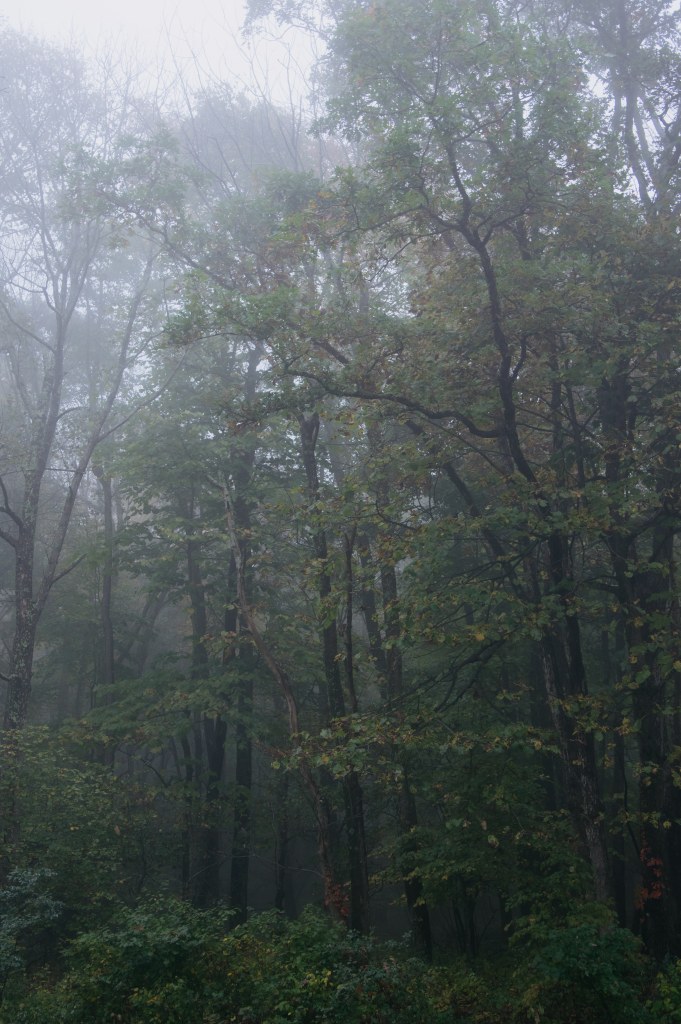
I’d like to know the language of the grove, to understand the subtle conversation of the trees. To speak without words, to give and to take as they need, to sustain and support through heat waves and storms – there’s a special kind of magic in those ancient roots and rustling leaves.
I wrote these for the November 2021 Poetry Challenge over at Fake Flamenco (which is a wonderful blog that you should definitely go visit and follow). I’ve never written a tanka before, or done a poetry challenge, for that matter, so I had some fun and wrote a few different poems. Enjoy! And if you want to participate, too, the deadline to post is Sunday, November 16th.
And here we are again, aren’t we? A blasé Monday spent checking things off the list (the interminable list). It’s pretty mundane, sure (but made better by sunshine and maybe some good wine at dinner). And the hits, well, yeah they do keep coming, but that’s not so bad because life does keep going. And, hey, as it stands, at least I’m not bored.
What’s left when the leaves have fallen and the grass has gone fallow? Once the air’s grown cold and the night sky’s shifted, once the frost has come and covered the hills and meadows, what’s left to us in this new season of darkness? To rest, to sleep, to build a hearth fire, to watch it snow. To breathe deep and release a sigh out among the coming winter winds. These belong to us, are made for us and left to us by the maiden and the mother and the crone. Just as it begins when new things grow in a world made bright, the old year ends quiet and star light, with a gentle and a loving letting go.
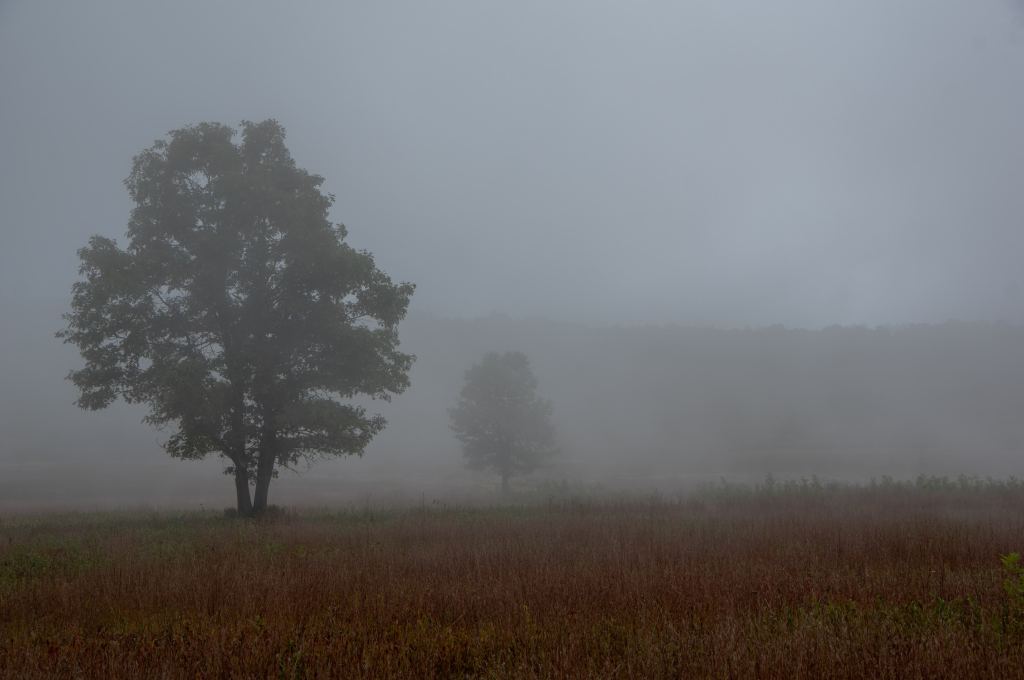
We’ll never know who did it. Who cast the spell and brought the fog. It rolled in as we slept, before the dawn, gray and viscous, a blanket of cool and damp. It slithered over the grass and in the trees, and curled itself into every little nook, cranny, and corner.
Life was quiet on the Mountain. That’s why we came. That’s why we built our homes and planted our gardens and settled here. High above the rest of the world, away from the noise and the hurry, we could live in peace, with no one but birds and bears and deer to judge us, and nothing but trees and stars and each other for company. This we wanted – this easy, quiet, slow turning of the days, this peaceful time together, this chance to build something better than we’d had before. We were all grateful for this place and this peace, and most of all for Mary, who’d made it all possible.
Mary had money, more money than she needed, she said. But more than that, she had love. Love to give to all of us, more than we’d ever had. She embraced us, guided us, and made for us a home in the sky.
“Come to the Mountain with me,” she’d pleaded, “come and live there together and we’ll show the world that it never should have given up on us.”
And we’d come. How quickly we’d packed our bags – only one for each of us – and said goodbye.
“We’ll build something they could never even imagine, and we’ll do it together,” Mary had said. “I deserve happiness. You deserve it, we all deserve it, and we’ll create it there, together. Come with me.”
And then she’d hugged each of us, touched her white, slender hand to each of our hearts, alabaster against the grime of a world gone wrong inside us, and she’d kissed our cheeks with her cool, red lips. And to every one of us, she’d said, “I am yours, and you are mine, and we belong to each other. Do you love me?”
And we’d answered, all of us, barely above a whisper, “I love you, Mary.”
“I love you, too,” she’d said.
And just like that, Mary became Mother, and all of us Brothers and Sisters, her Children. She’d protect us, feed us, clothe us, love us. We truly did belong to each other, and not even an army couldn’t break us apart.
In the beginning, in those earliest days on the Mountain, we prayed and we worked and we sang. And we ate together at every meal, stretched out on threadbare blankets across the high Green Valley meadow, or squeezed into the Peoples’ Hall if the weather was cold or wet. We ate the food we grew, and Mary, always somewhere in the middle of all of us, reminded us to be grateful, and to show appreciation.
“We work together as one, and what feeds one feeds all. We live for each other, and to each other we give life.”
And on Thursday evenings, tucked together into the chapel at the Pinnacle, the top of our little village, Mary told us stories and asked us to share our own. And when those stories were sad, or angry, then we’d join hands and lift our voices to cast out that dangerous energy.
“Make no mistake, my Children,” Mary would tell us, “there is evil in this world, and those who think it and speak it, they manifest it. They cast it, they give it form.”
And here, she would pause, breathe deep, and we could feel her fear and worry. And then she would smile, gentle and wide.
“But we are new,” she’d say, “and we are safe here together. We are new every day, every moment, that we choose to live in love and not in fear.”
Mary spoke often of the Darkness. Her greatest agony, she said, was knowing that it was always close by, in all of our hearts, and our greatest task was keeping it at bay.
“We all harbor Darkness,” she’d warn us. “Even within myself, I feel it. But we must never let it take control of us, and we must never give in to it. My mother always told me, and I tell you now, that one bad apple spoils the bunch. What’s done by one is done by all, but we can work together to harbor the Light. We must always love and trust each other. And my Children, sometimes trust must be earned, and love must be cruel.”
We all knew what she meant. We all knew the Punishments for evil thoughts and dark impulses. Mary decided each case, and we knew she felt the pain of each judgment. A day spent facing the wall, or an evening without supper – these were for mild discretions, like laziness or a harsh tongue. A beating administered by the Offended, that was the cost of spreading lies. But for something truly evil, it was a night in the Cellar, in the cold, dark ground with the worms and snakes, and with no light, food, or water. And if the offense was bad enough, a night could become a week, or more.
Mary would cry as she led us there to witness a Punishment. And she would tell us, as she embraced the Offender, “You are Punished now because you are loved. May you learn this lesson, Child, and may your return to the Light be your reward.”
Always, one of us was missing. But we knew the stakes. We knew that any hatred or sinfulness within one of us could spell the end for all.
Some days, Mary would leave us, and spend time on her own.
“I need my Silence,” she’d say, “so I can hear what can’t be heard. I will bring it to you, and share it with you. My mind is your mind.”
She kept her room in the back of the Pinnacle, and we knew never to intrude upon that space. And so on the days when she rested and listened, we worked as normal, often harder, so she could see. We sewed and mended, we scrubbed, we cooked, we chopped wood for our fires and gathered flowers or leaves for our hearths, and we waited. And when she came back to us, she always noticed.
“My Children, I am proud.”
The greatest compliment.
Our lives were simple. And our love for each other was deep and unshakeable, and we lived for a long time in that comforting, warm certainty. And then, one day, we noticed a change in Mary.
It started at supper, on a cool autumn evening. As Mary led us through our Evening Prayer, her voice trembled.
“My Children,” she began, “my heart is heavy today, and my bones are tired. I feel a change coming, and I fear it will be difficult for us.”
She paused, and we waited, each of us holding our breath and clenching our fists.
“I ask that you trust me, as I trust you,” she continued. “I do not know what our future holds, but I will guide you, and I will show you the path, as I always have.”
She touched one hand to her chest, and raised her mug of tea in the other. “Our Family,” she said.
“Our Family,” we repeated.
In the days that followed, Mary spent more time alone, and when she did join us, her gaze was distant, her blue eyes clouded, and she spoke barely a word. She didn’t join us in preparing our meals, or in our daily chores. And when she did speak, her voice was flat and empty.
“The time is coming,” she would say. “A change is coming. It is one we all need.”
And then, one morning, Mary didn’t come to the Peoples’ Hall for breakfast. She didn’t come the next morning, or the one after that, and we started to worry.
And on the morning of the fourth day, we found a note, and beside the note, a bottle of amber liquid, both placed in the center of the main dining table.
My children, the note read, in Mary’s delicate, spiraling script, the day is today. All Mothers must let their children fly, and today, you must spread your wings. It is the pain all Mothers must endure. I have taught you what I know, and you have made my life full and beautiful. We have belonged to each other, and we will belong to each other always. But today, I must allow you to grow beyond me, and you must allow yourselves to take these next steps into the Light. I must leave you, but my heart will remain on the Mountain, because it is there within each of you.
And here, she’d written instructions. Terrible instructions.
I will meet you on the Path, my Children, though I will walk it with you no longer. Trust that when the time is right, we will be together again.
There was some argument about what to do next. Some of us, the weak and the frightened, couldn’t bear to follow Mary’s guidance, and they left and made their way down the mountain. But most of us, we stayed. And we gathered cups from the kitchen, and we poured for each other from the bottle and drank deeply. And we fell asleep, just as Mary said we would, and when we awoke, there was the fog.
Now we are here alone. And the fog will not relent, and we will never know who brought it to us – doubtless one of the few who left us spoke it into being and made it real. The Light is hard to see, but we will not give up.
And Mary will come to us, we know, when the time is right, just as she said. Perhaps she’ll emerge from the tree line in the Green Valley, or she’ll make her way down from the Pinnacle, weaving through the dark trees in her bright white dress.
But we know she’ll come. Our Mother would never abandon us. In this, we have decided, she is trying to teach us. Patience, maybe, or trust. We trust her. And so we will wait here, for as long as we must. We will wait for her, in this fog, on this mountain, our home.
*************
Thank you for reading! This is the tenth of twelve stories I’ll write as part of my 2021 Short Story Challenge. Twelve months, twelve stories, and the theme this year is: Home.
Here are the first nine stories, if you’d like to read them:
…will be posted on Halloween. Sunday isn’t a normal posting day for me, I know, but here’s the thing – the weather today is dark and cloudy, rainy and windy, and pretty much perfect for writing a creepy story. So, I’m taking advantage, and time, and really sinking into this one. I can’t wait to see what it looks like once it’s done.
In the meantime, as a preview, here are the first couple of paragraphs:
We’ll never know who did it. Who cast the spell and brought the fog. It rolled in before dawn, gray and viscous, a blanket of cool and damp. It slithered over the grass and in the trees, and curled itself into every little nook, cranny, and corner.
Life was quiet on the mountain. That’s why we came. That’s why we built our homes and planted our gardens and settled here. High above the rest of the world, away from the noise and the hurry, we could live in peace, with no one but birds and bears and deer to judge us, and nothing but trees and stars and each other for company. This we wanted – this easy, quiet, slow turning of the days, this peaceful time together, this chance to build something better than we’d had before. We were all grateful for this place…
Are you intrigued? I hope so! And I hope you’ll pop by on Sunday and give it a read.
I’ve heard it said the moon’s a melancholy soul – up there all alone, with no light of its own and only sometimes whole. But I spend a lot of time with the moon, waiting somewhere between asleep and awake while the world turns from night to day and the sky changes with the seasons. And I say this: It’s something truly special (and not for all of us) to keep close the company of the stars, to see through another’s radiance and shine a path bright and clear in the darkness.
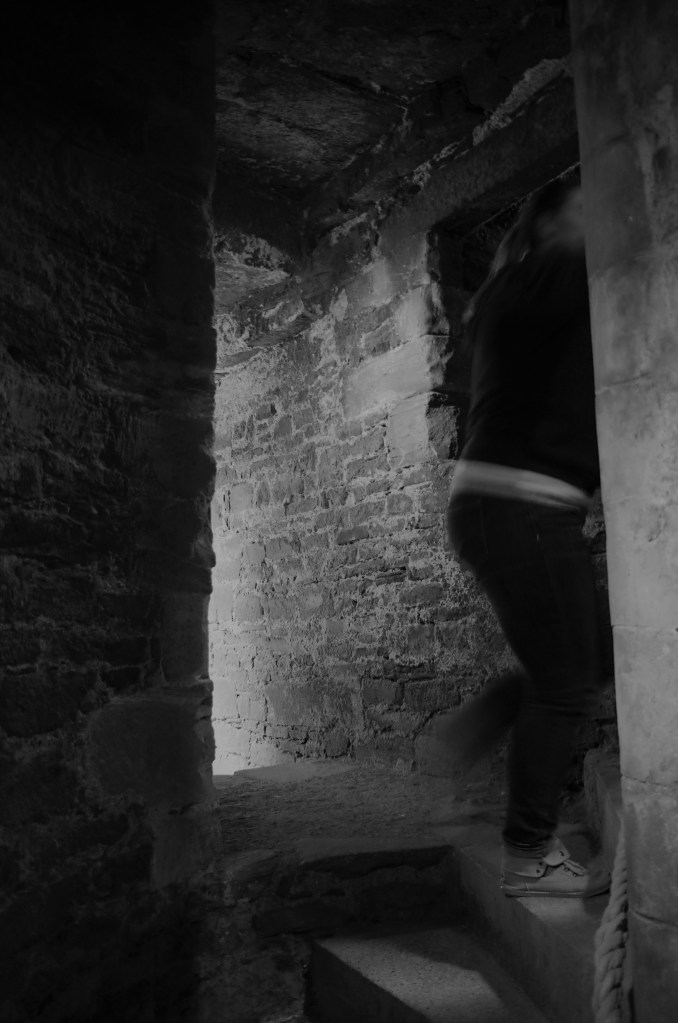
I am only a flash in the corner of your eye, nothing but a shadow, or a trick of the light on the stair, there and gone. You can try to catch me in a photo, or to capture the sound of my voice. Many have, and most leave disappointed. Are you scared? You should be, you know. I’m not for everyone.
Strike a match against the October sky and watch it burn – blood orange and blue hot with the fire of elders, of ages. It rages and then smolders. And in its embers lay the sands that turn the year from day to night, and soothe the world to sleep.